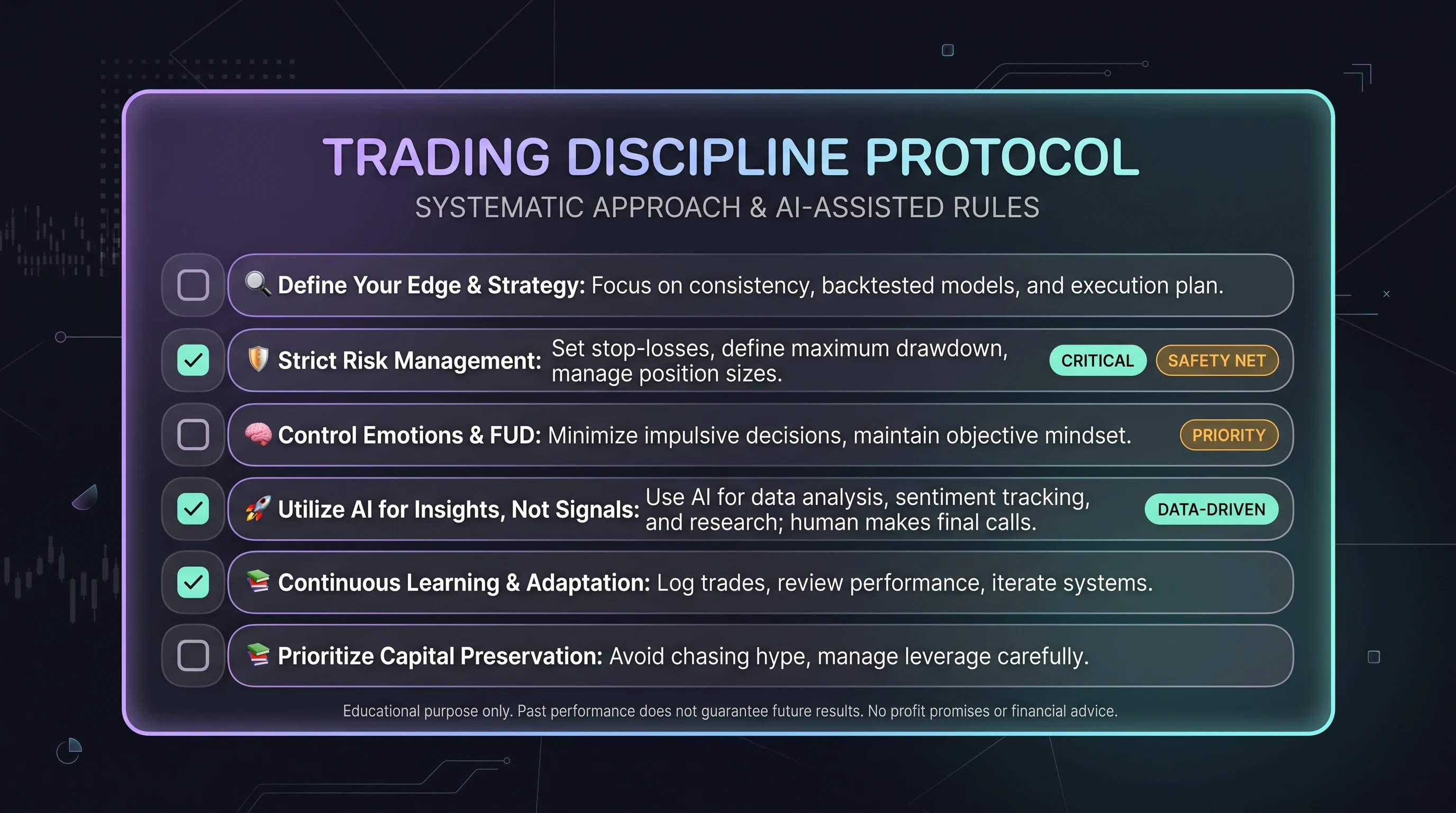
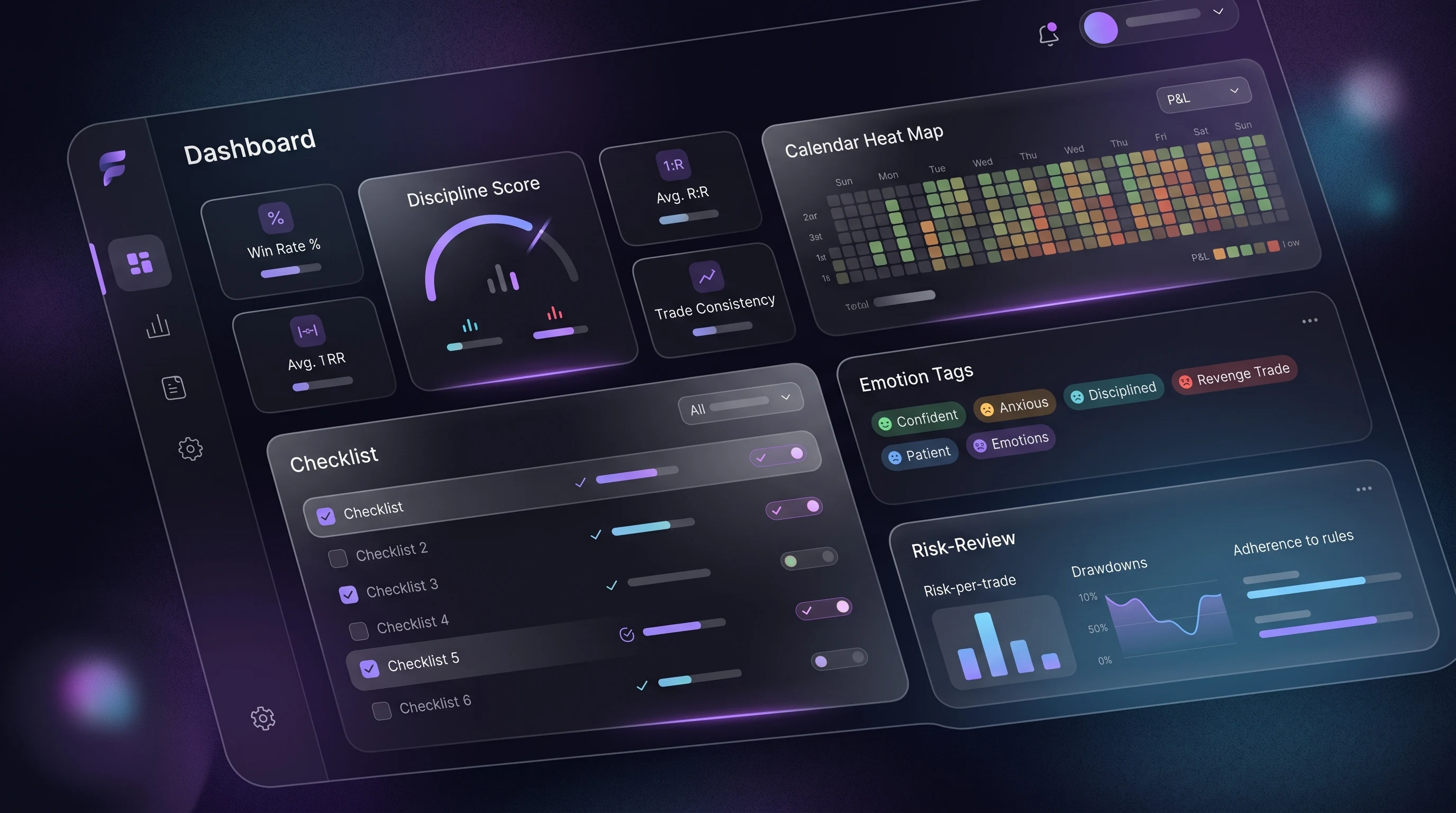
Trading Discipline
Overtrading in Prop Firm Challenges: Causes, Signs, and Fixes
Learn why overtrading happens during prop firm challenges, how to spot behavior drift, and practical journal-based review steps to support discipline.
Overtrading in Prop Firm Challenges: Causes, Signs, and Fixes
Prop firm challenges can create a specific kind of pressure. A trader may feel watched by the rules, the clock, the drawdown limits, the profit target, and the idea that every decision matters. In that environment, overtrading can appear quietly. It may start as one extra trade after a loss, one rushed entry after missing a move, or one more setup late in the session.
What overtrading means in a prop firm challenge
Overtrading does not only mean taking a high number of trades. A trader can take many planned trades in a system that is designed for frequent execution. A trader can also overtrade with only two or three positions if those trades were taken outside the plan.
In a prop firm challenge, overtrading usually means the trader is adding trades for reasons that are not part of the documented process. The reason may be emotional pressure, a desire to recover losses, fear of missing out, boredom, frustration, or the feeling that the challenge must be completed quickly.
A useful definition is simple: overtrading happens when trade frequency, size, timing, or setup quality changes because the trader is reacting instead of following the plan. This kind of behavior sits at the center of the broader system covered in Trading Discipline for Prop Firm Traders: A Practical System.
Why prop firm challenges can trigger overtrading
Prop firm environments often combine opportunity with constraint. The rules can help create structure, but they can also increase emotional pressure if the trader treats the challenge as a race.
Common triggers include:
- Trying to recover after an early loss
- Increasing trade count near the end of a challenge period
- Forcing setups after missing a planned trade
- Taking lower-quality trades because the profit target feels far away
- Trading longer than planned after a winning streak
- Treating daily loss limits as room that must be used
- Confusing activity with progress
The problem is not that the trader feels pressure. Pressure is normal. The problem appears when pressure changes the trader’s behavior without being recorded, reviewed, or controlled by a rulebook.
Sign 1: Your trade count changes after wins or losses
One of the clearest signs of overtrading is a trade count that changes after emotional events. A trader may take more trades after a loss because they want to recover. Another trader may take more trades after a win because they feel confident and want to accelerate the challenge.
The review question is not simply, did I take too many trades? A better question is, did my trade count change because the market provided more planned setups, or because my emotional state changed?
A trading journal can make this easier to see. Track the number of trades per day, the first trade result, emotional tags, and whether each trade matched the planned setup. Over time, the trader can review whether trade count increases after specific outcomes.
Sign 2: Setup quality gets weaker through the session
Overtrading often shows up as declining setup quality. The first trade may follow the plan, while later trades become less clear. The trader may start accepting entries that would have been rejected earlier in the day.
This is especially common when a trader stays at the screen after the planned session has ended. Fatigue, boredom, and frustration can make lower-quality decisions feel reasonable in the moment.
A simple review field can help: rate each trade as A, B, or C quality based on the written plan. The grade should be assigned by criteria, not by outcome. A losing A-quality trade may still be a process-valid trade. A winning C-quality trade may still be evidence of overtrading.
Sign 3: You trade near limits without a specific plan
Prop firm challenges often include daily loss and maximum drawdown rules. These limits matter because they can change decision-making. A trader who is close to a limit may become more cautious, more impulsive, or more likely to take a large trade in an attempt to recover.
Overtrading near limits can be especially risky because the trader may be thinking about the account rule instead of the trade plan.
Useful journal fields include:
- Distance to daily loss limit before entry
- Distance to maximum drawdown before entry
- Whether the trade is allowed by the personal rulebook
- Whether the trade was planned before the limit pressure appeared
- Reason for taking or skipping the trade
The goal is not to define a universal risk rule. The goal is to make rule pressure visible so the trader can review how it affects behavior.
Sign 4: You keep adding trades to feel productive
Some traders overtrade because sitting still feels uncomfortable. In a challenge, inactivity can feel like falling behind. But waiting is often part of a trading process. If a trader treats every quiet period as a problem to solve, they may start taking trades simply to feel active.
This is where a written routine helps. The routine can define what a trader does when there is no setup: review screenshots, update the journal, step away from the screen, study past trades, or end the session. Productive behavior does not always mean placing another trade.
Sign 5: Your post-trade notes become vague
When traders follow a plan, they can usually explain the trade clearly. When they overtrade, the notes often become vague:
- Looked good
- Felt like it would move
- Wanted to make it back
- Did not want to miss it
- Took a chance
These notes are useful because they reveal a shift from planned execution to emotional reaction. Instead of deleting or hiding them, keep them in the journal. They are evidence for review.
A practical review system for overtrading
Overtrading is easier to reduce when it is measured. A trader does not need a complicated system. A few fields can create a useful feedback loop.
Track these items for each trade:
- Setup name
- Planned or unplanned
- Session
- Trade number of the day
- Emotional state before entry
- Distance to daily loss limit
- Setup quality grade
- Rule followed or broken
- Reason for entry
- Reason for exit
At the end of the week, review the data by behavior rather than only by profit and loss. Look for questions such as:
- Which trade numbers were most likely to be unplanned?
- Did overtrading appear more often after losses or wins?
- Did certain sessions create more rushed entries?
- Did lower-quality trades cluster near rule limits?
- Did emotional tags appear before unplanned trades?
These questions do not tell the trader what to trade. They help the trader understand when their process tends to drift.
Fix 1: Define a maximum decision budget
A decision budget limits how many trade decisions a trader will make in a session. This does not have to be the same as a fixed trade limit, though some traders use one. The important point is that the rule exists before the session begins.
Examples of decision-budget rules include:
- Review no more than a defined number of trade opportunities per session
- Stop trading after a defined number of unplanned impulses
- End the session after a rule break
- Take a break after a large emotional reaction
- Require a written reason before any additional trade after the first loss
The rule should be personal and testable. It should also be written in a way that can be reviewed later.
Fix 2: Use a 30-second pause before entry
A short pause can interrupt reactive behavior. Before entry, the trader can answer a few questions:
- Is this setup in my plan?
- What is the invalidation point?
- What rule could this trade pressure?
- Am I taking this because of the chart or because of the previous trade?
- Would I still take this trade if I were flat on the day?
The pause is not a guarantee of better decisions. It is a discipline tool that creates space between impulse and action.
Fix 3: Separate recovery rules from normal rules
Many overtrading episodes begin after a loss. A trader may need a specific recovery-state rulebook that activates after certain events. For example, after a defined loss, the trader may step away, reduce decision frequency, or require a higher level of setup quality.
The exact rule depends on the trader’s process and the account rules. The educational point is that recovery mode should not be improvised during stress. It should be defined before the session.
Fix 4: Review overtrading by pattern, not shame
Overtrading review should be factual. Shame often creates avoidance, and avoidance prevents review. The trader is trying to identify a behavioral pattern, not create a personal judgment.
A useful weekly note might sound like this:
This week, unplanned trades appeared most often after the first losing trade of the day. The common tags were frustration and urgency. Next week, I will add a written pause after the first loss and stop the session after one unplanned trade.
That kind of note is specific, measurable, and process-focused.
How PropLog AI fits into the workflow
PropLog AI can help organize the data that makes overtrading easier to review: trade tags, emotional notes, P&L calendar patterns, rule adherence, setup quality, screenshots, and weekly reflections.
For example, a trader can tag trades as planned or unplanned, mark emotional states before entry, and review whether overtrading clusters on certain days or after certain outcomes. AI-assisted reflection can help summarize journal patterns and suggest review questions, but it should not be treated as trading advice or a source of signals.
The goal is better organization and clearer self-review, not guaranteed performance.
Final thoughts
Overtrading in a prop firm challenge is often a process problem before it becomes a performance problem. It usually starts when pressure changes behavior: more trades, weaker setups, rushed entries, or decisions made near account limits without a clear plan.
A trader cannot remove all pressure from a challenge, but they can make behavior easier to observe. By tracking trade count, setup quality, emotional tags, rule pressure, and planned versus unplanned trades, the trader creates a practical feedback loop.
That feedback loop does not guarantee results. It does, however, give the trader a clearer way to review discipline, reduce guesswork, and understand when the process is beginning to drift.
Start your trading journal
Track trades, understand your psychology, and get personalized AI coaching. No signals, no financial advice — just better self-review from your own data.
Get Started Free