Trading Journaling
Best Trading Journal for Prop Firm Traders: What to Track and Why
Learn what prop firm traders should track in a trading journal, how to review behavior patterns, and how journaling supports discipline without promising trading outcomes.
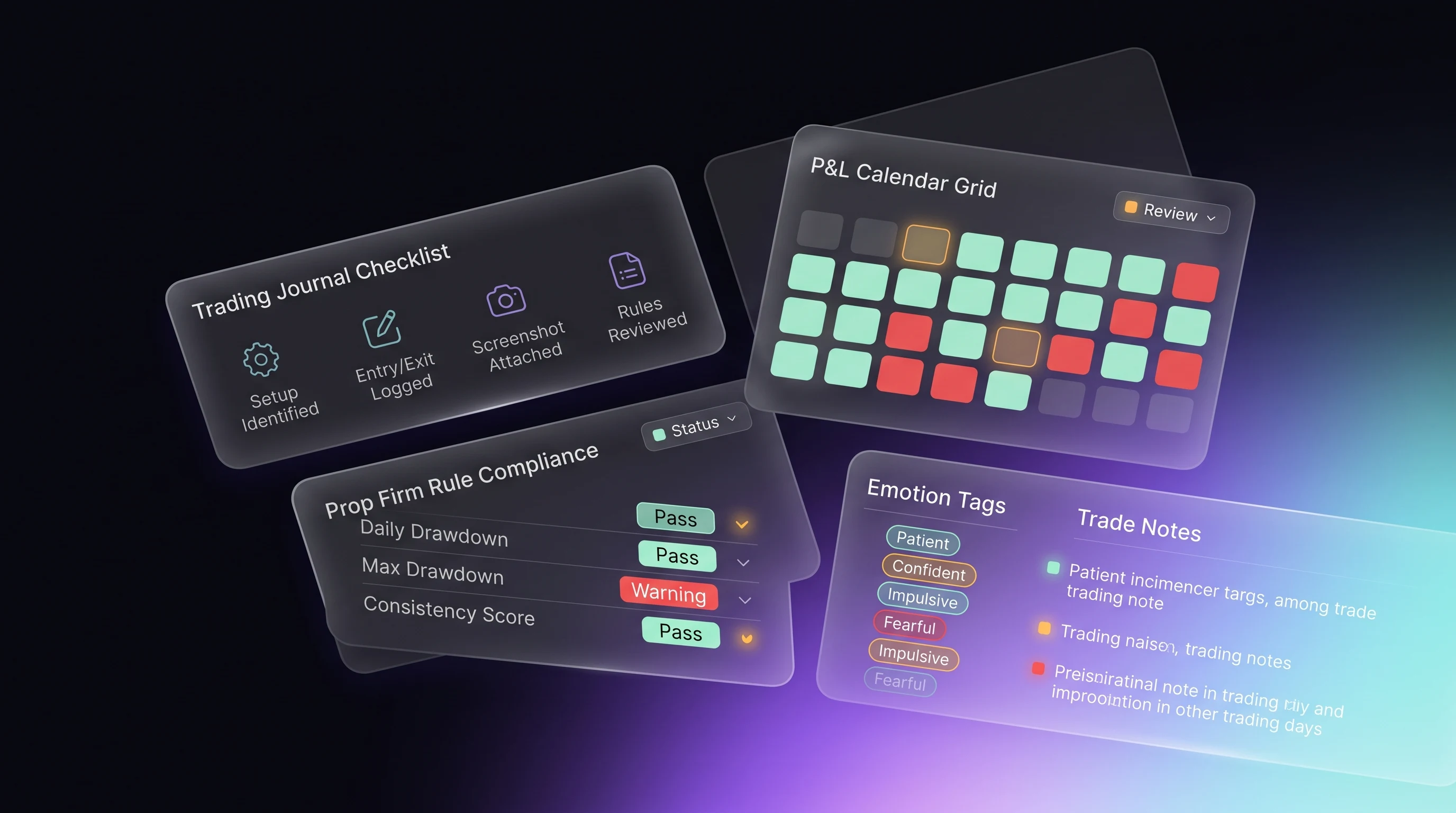
Prop firm traders operate under constraints that make journaling more important than simple note taking. A normal trading journal records entries and exits. A useful prop firm trading journal also helps a trader review risk behavior, rule adherence, emotional triggers, and the conditions that tend to appear before mistakes.
Why prop firm traders need a different kind of journal
Prop firm challenges and funded accounts often include rules around daily loss, maximum drawdown, position sizing, news trading, consistency, or minimum trading days. Because of that, the question is not only whether a trade made or lost money. The more useful question is whether the trader followed a repeatable process while staying inside the account rules.
A strong journal helps answer questions such as. If you are still building the habit, start with the foundation in why every trader needs a trading journal before adding more advanced prop firm review fields:
- Did I take the trade for a documented reason?
- Was the risk planned before entry?
- Did I change the plan after the position was open?
- Did a winning or losing streak affect the next decision?
- Did I trade differently near a rule limit?
- What conditions show up before my worst trading days?
The goal is not to predict the next trade. The goal is to create a reliable feedback loop.
Core fields every prop firm trading journal should include
A practical journal should be detailed enough to support review, but simple enough that a trader can complete it consistently. The best setup usually combines structured fields with a short written reflection.
Trade setup
Record the market, session, direction, strategy name, timeframe, and setup type. This makes later review easier because trades can be grouped by context rather than judged one at a time.
Planned risk
Document intended risk before entry. Include position size, stop location, planned invalidation, and whether the trade fits the account’s rules. This helps separate planned risk from improvised risk.
Execution notes
Track whether the entry, stop, target, and exit followed the original plan. If the plan changed, write down why. Over time, this can reveal whether changes were based on new information or emotional pressure.
Rule adherence
For prop firm traders, this may be the most important category. A profitable trade can still be a poor process trade if it violated risk rules. A losing trade can still be useful if it followed the plan and produced reviewable data.
Emotional and behavioral tags
Use tags such as rushed, patient, revenge trade, overconfident, hesitant, distracted, or rule-following. Tags help convert vague emotions into patterns that can be reviewed objectively. The psychology behind why these specific patterns appear is covered in Trading Psychology for Prop Firm Traders.
Screenshot or chart context
A screenshot can preserve what the trader saw at the time. This is especially useful when reviewing whether the setup was clear or whether the trade idea was forced.
Use a P&L calendar to review trading behavior
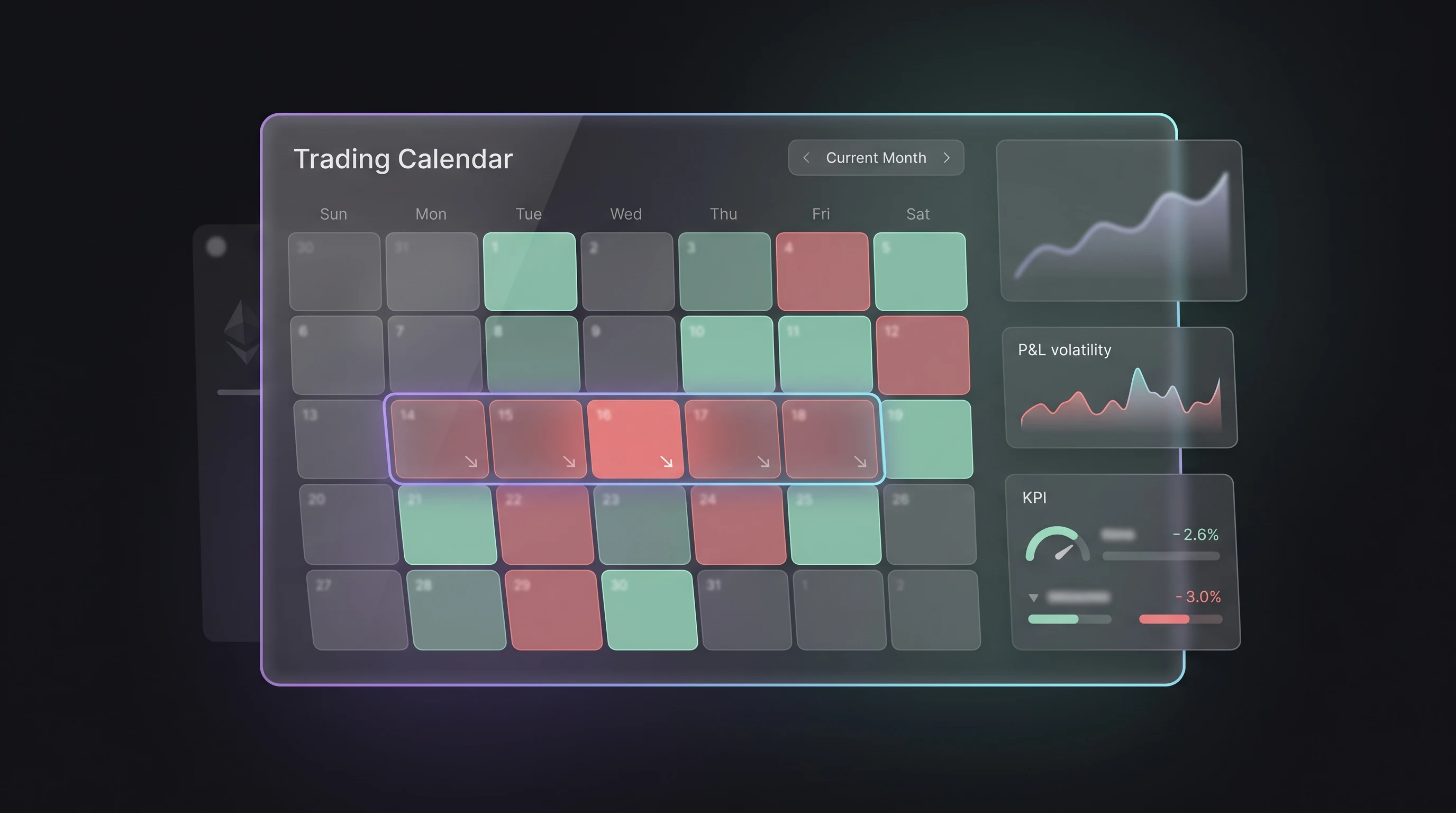
A P&L calendar is useful because trading mistakes often cluster. One losing trade may not reveal much. A sequence of losing days, oversized trades, or late-session decisions can reveal a behavioral pattern. P&L Calendar for Traders: Spot Revenge Days and Losing Streaks walks through this kind of pattern-spotting in more detail.
When reviewing a calendar, look for patterns such as:
- Larger losses after a strong winning day
- More trades after the first loss of the day
- Rule pressure near daily drawdown limits
- Lower-quality trades during certain sessions
- Avoidance after a losing streak
The point is not to label a day as good or bad based only on profit and loss. The point is to understand whether the day followed the process.
Weekly reviews matter more than perfect notes
Many traders collect journal entries but never review them. A weekly review turns raw notes into decisions about process. The review can be simple:
- Identify the best process trade of the week.
- Identify the worst process trade of the week.
- List the most repeated mistake.
- List the most repeated strength.
- Choose one behavior to improve next week.
This keeps the journal practical. A trader does not need to solve every weakness at once. One focused improvement is easier to track than a long list of vague goals.
How AI can support journaling without replacing judgment
AI can help organize journal data, surface recurring tags, summarize weekly notes, and suggest reflection questions. This is especially useful when reviewing patterns around trading emotions, because emotional mistakes are often easier to spot after several entries are grouped together. It should not be treated as a source of trading signals or a promise of better outcomes.
For example, an AI trading journal assistant can help a trader ask:
- Which tags appeared most often before my largest losses?
- Did I follow my risk plan more consistently in one session than another?
- What notes did I write after impulsive trades?
- Which rule did I break most often this month?
These are educational review questions. They help the trader examine behavior and process rather than outsource decisions.
A simple prop firm journal template
A useful template might include:
- Date and session
- Instrument or market
- Setup name
- Planned risk
- Entry reason
- Exit reason
- Rule adherence
- Emotional tags
- Result
- Screenshot
- One-sentence lesson
The one-sentence lesson is important. It forces the trader to turn each trade into a clear observation without overanalyzing.
Common journaling mistakes to avoid
Only journaling losing trades
Winning trades can hide poor habits. If a trader breaks a rule and makes money, the result may reinforce a behavior that becomes costly later.
Writing too much and reviewing too little
A journal is only useful if it can be reviewed. Short structured notes are often better than long emotional entries that are never revisited.
Treating P&L as the only score
Profit and loss matters, but it is not the only measure of process. Prop firm traders also need to understand discipline, consistency, and rule adherence.
Using the journal to predict outcomes
A journal can reveal tendencies and support better reflection, but it cannot guarantee future performance. Avoid any workflow that turns journaling into a promise of profits or funding.
Where PropLog AI fits
PropLog AI is designed around the idea that journal data should become a practical feedback system. Trade notes, P&L calendar views, tags, weekly reviews, and AI-assisted reflection can help traders understand their behavior more clearly.
The value is educational: better organization, more consistent review, and clearer questions. It does not remove risk, provide financial advice, or guarantee trading results.
Conclusion
The best trading journal for prop firm traders is not the one with the most fields. It is the one that helps a trader consistently review decisions, risk behavior, rule adherence, and emotional patterns.
A good journal turns trading history into structured feedback. For prop firm traders, that feedback can support discipline and accountability while keeping the focus where it belongs: process, risk awareness, and continuous review.
Start your trading journal
Track trades, understand your psychology, and get personalized AI coaching. No signals, no financial advice — just better self-review from your own data.
Get Started Free