AI Trading Coaching
AI Trading Coach for Prop Firm Traders: What It Should and Should Not Do
Learn what an AI trading coach for prop firm traders should and should not do -- pattern review on your own data, never signals or guaranteed outcomes.
AI Trading Coach for Prop Firm Traders: What It Should and Should Not Do
Interest in AI trading coaches has grown quickly, and prop firm traders are a natural audience: the accounts come with strict rules, the review workload is real, and anything that promises to make review faster is appealing. That appeal makes it worth being precise about what an AI trading coach can actually and honestly do, and what it should never claim to do.
The short version: a well-built AI trading coach is a pattern-recognition and organization tool built on a trader’s own journal data. It is not a market predictor, not a signal service, and not a substitute for a trader’s own judgment about what to trade.
What an AI Trading Coach Actually Is
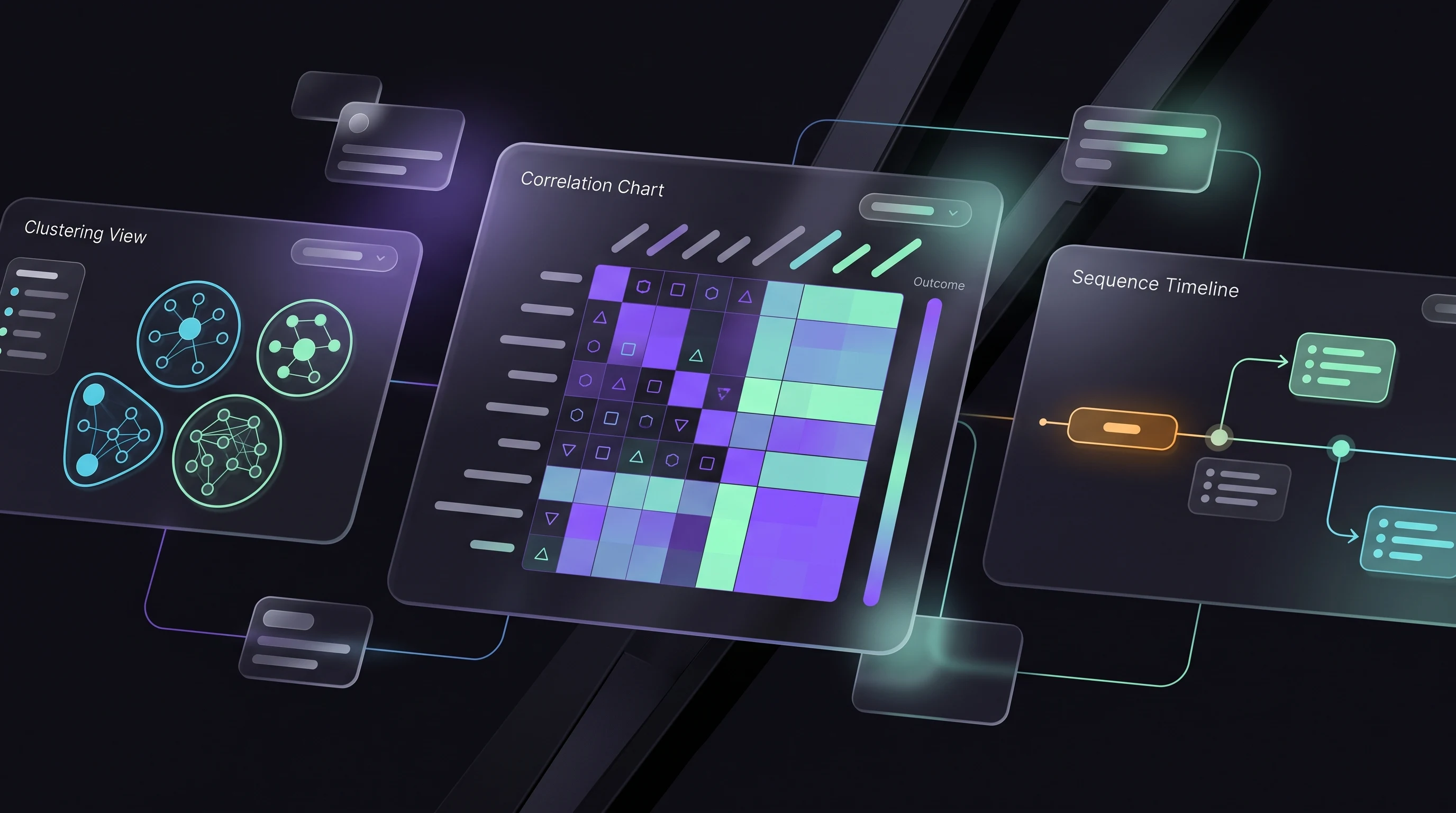
At its core, an AI trading coach reads structured data a trader has already logged — trades, tags, emotional states, rule-compliance notes, P&L history — and looks for patterns across that history that would be slow or difficult to find by scrolling through entries manually.
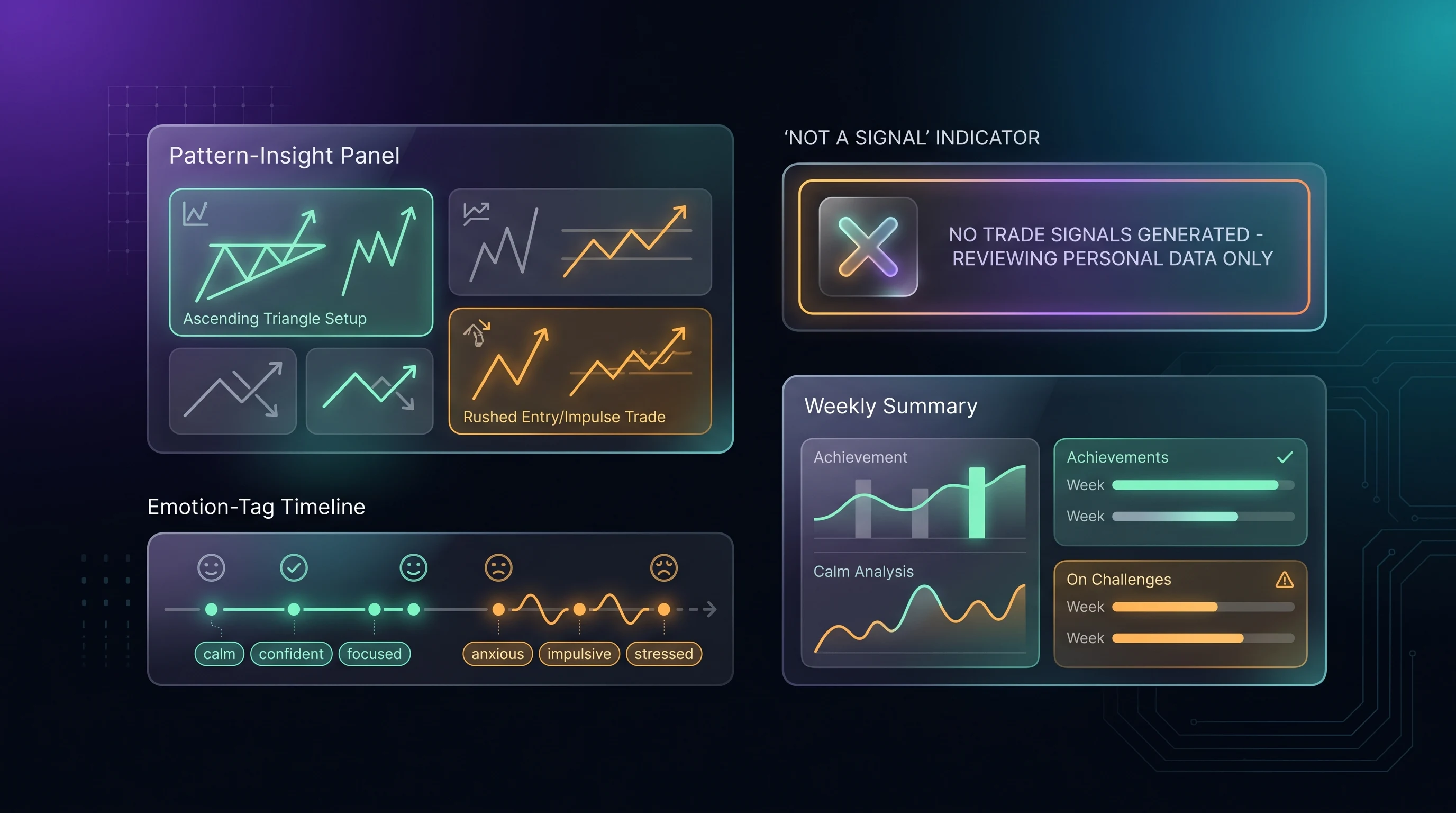
That might mean surfacing that a particular emotional tag shows up disproportionately before rule breaks, that a specific session produces weaker setup quality, or that a trader’s process holds up well after losses but breaks down after winning streaks. All of these are observations about a trader’s own recorded behavior. None of them are predictions about what the market will do next.
This distinction matters because “AI” gets used loosely in trading marketing, sometimes to describe genuine pattern-recognition tools and sometimes to describe signal services dressed up in more sophisticated language. A prop firm trader evaluating any AI tool, including PropLog AI’s own Propol AI Coach, should ask specifically which of these two categories it falls into.
What an AI Trading Coach Should Do
A useful AI trading coach for prop firm traders should:
- Analyze a trader’s own journal data for recurring behavioral and process patterns
- Surface correlations the trader might not notice manually, such as which emotional tags precede rule breaks
- Help organize review by session, setup, rule-compliance, and outcome
- Ask better review questions based on the trader’s own history, rather than generic advice
- Make weekly and monthly review faster and more consistent
- Respect prop firm account rules and constraints as context for the review, not as something to be gamed
Each of these is fundamentally about making the trader’s existing process easier to see and maintain. None of them requires the tool to know anything about where the market is headed.
What an AI Trading Coach Should Never Do
Equally important is a clear list of what a legitimate AI trading coach should not do:
- It should not issue buy or sell signals, entry or exit recommendations, or specific trade instructions.
- It should not promise or imply a specific win rate, profit target, or funded-account outcome.
- It should not present pattern analysis as a guarantee of future results.
- It should not replace a trader’s own risk management decisions.
- It should not act as a substitute for licensed financial or investment advice.
- It should not obscure the difference between “here is a pattern in your own past data” and “here is what you should do next in the market.”
A tool that crosses into any of these behaviors has moved from educational review support into something closer to unlicensed trading advice, regardless of how the marketing describes it. This is one of the more specific patterns worth watching for, and it is closely related to a broader question worth asking about any AI trading tool: whether it can actually detect problem behaviors like revenge trading and overtrading from journal data, or whether it is simply repackaging generic tips.
How AI Coaching Differs From a Signal Service
A signal service tells a trader what to do next: buy this, sell that, enter here, exit there. The service is making a claim about the market’s future direction, whether it says so explicitly or not.
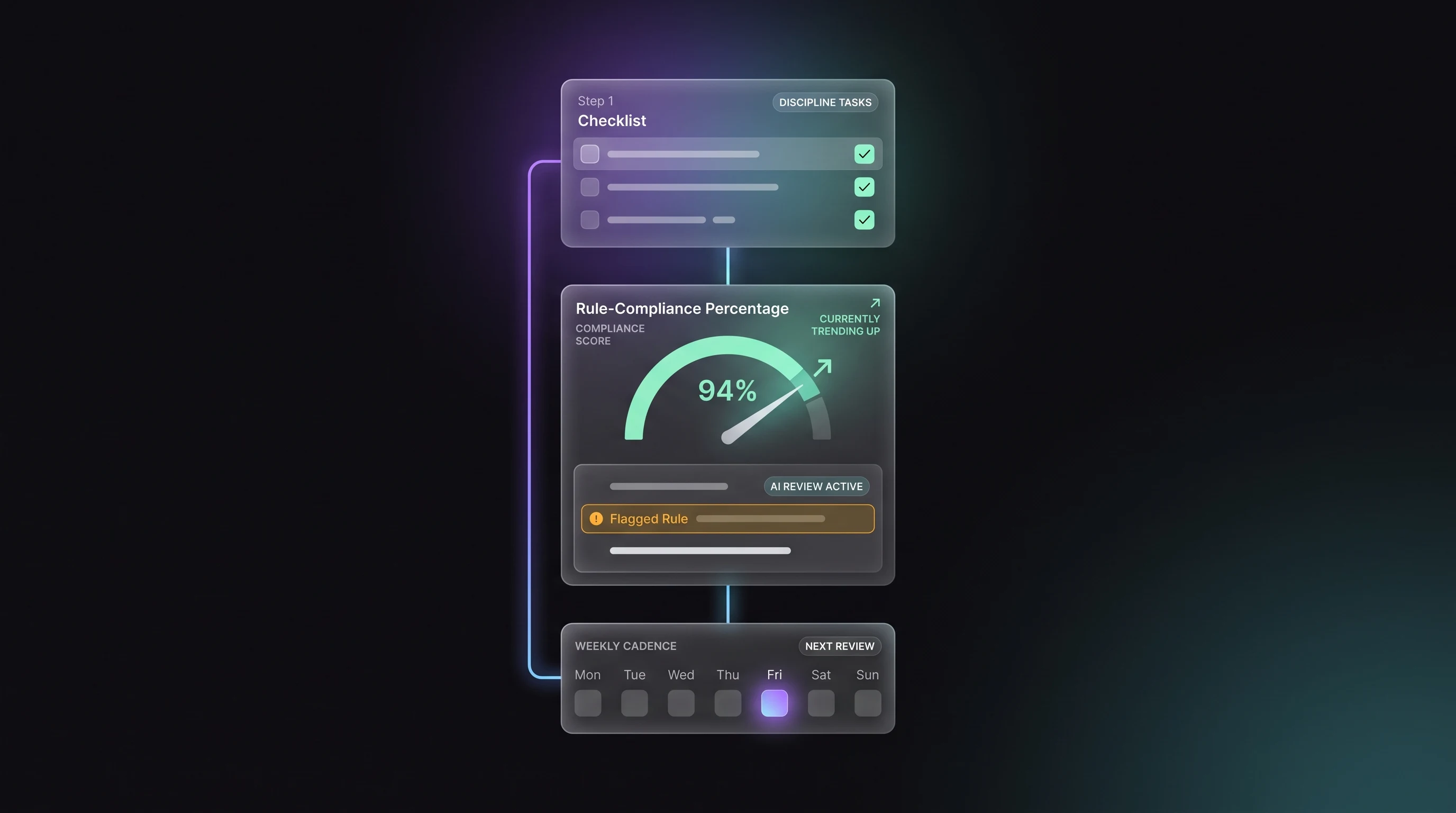
An AI coaching tool built around journal review does something categorically different: it describes what already happened in the trader’s own account and behavior. “Your rule-compliance rate drops on Fridays” is a description of the past. “Buy EUR/USD now” is a claim about the future. Confusing the two, or blending them into a single product, is exactly the pattern prop firm traders should watch for.
This is also why an AI coach cannot honestly claim it will help a trader pass a challenge faster or more reliably. It can help a trader see their own process more clearly. What a trader does with that clarity, and how the market behaves, are both outside what any pattern-recognition tool can control or promise.
Where AI Coaching Fits Into an Existing Process
AI coaching works best as a layer on top of habits that already exist, not as a replacement for them. A trader still needs a trading journal with real fields, such as the ones described in Best Trading Journal for Prop Firm Traders: setup, planned risk, rule adherence, and emotional tags. Without that underlying data, an AI coach has nothing meaningful to analyze.
The same is true for the psychological side of trading. Patterns like revenge trading, overconfidence after a win, or the specific triggers covered in Trading Psychology for Prop Firm Traders: Why Your Mind Breaks the Rules are exactly the kind of thing an AI coach can help surface at scale, once the trader is already tagging that information consistently. The AI layer amplifies an existing review habit. It does not create discipline on its own.
What Good AI-Assisted Review Looks Like in Practice
A reasonable AI-assisted weekly review might work like this: the trader has already logged a week of trades with setup, risk, and emotion tags. The AI layer summarizes the week, flags that three of the four largest losses shared a specific emotional tag, and asks whether that tag tends to show up at a particular time of day.
The trader then decides what, if anything, to do about that observation. The AI tool does not decide for them, does not tell them to avoid trading at that time, and does not claim that avoiding it will improve results. It surfaces a specific, data-backed question. The trader supplies the judgment.
Questions to Ask Before Trusting Any AI Trading Tool
Before relying on any AI trading coach, prop firm traders can reasonably ask:
- Does this tool ever suggest a specific trade, entry, or exit?
- Does it make claims about win rate, profit, or funding outcomes?
- Is its analysis based on my own journal data, or on generic market data?
- Does it explain why it flagged something, or just issue a conclusion?
- Would I still trust its output if it turned out to be wrong about a specific week?
A tool that struggles to answer these questions honestly, or that becomes vague when asked directly, is worth treating with more skepticism than one that clearly states its limits.
How Propol AI Coach Approaches This
Propol AI Coach, built into PropLog AI, is designed specifically around the boundaries described above. It analyzes a trader’s own journal entries, tags, and P&L history to surface patterns such as recurring rule breaks, emotional triggers, or session-specific weaknesses. It does not generate trade ideas, does not issue buy or sell signals, and does not estimate the probability of passing a specific challenge.
Its output is meant to function like a well-organized monthly statement: a clearer view of what already happened, with better questions attached, rather than instructions about what to do next. Traders remain responsible for their own trading decisions, risk management, and interpretation of any pattern the tool surfaces.
Common Misconceptions About AI and Trading
“AI can predict the market better than a human.” Pattern recognition on a trader’s own historical behavior is a different task from forecasting markets, and conflating the two is a common source of unrealistic expectations.
“If it’s AI, it must be objective and correct.” An AI tool is only as good as the data and design behind it. Journal-based pattern detection can be genuinely useful without being infallible, and it should always be treated as a starting point for review, not a final verdict.
“AI coaching means I don’t need to journal anymore.” The opposite is closer to true. AI-assisted review is only as good as the underlying journal data. Sparse or inconsistent logging produces thin, less reliable analysis.
“A coach that sounds confident must be reliable.” Confidence in tone is not evidence of accuracy. A responsible AI trading coach should be willing to say when a pattern is based on a small sample or when the data does not support a clear conclusion.
Conclusion
An AI trading coach can be a genuinely useful part of a prop firm trader’s review process, but only within clear limits. Its job is to make patterns in a trader’s own journal data easier to see, not to predict markets, issue signals, or guarantee outcomes. Traders evaluating any AI trading tool, including Propol AI Coach, should look specifically for that boundary, and treat any tool that blurs it with appropriate caution.
Start your trading journal
Track trades, understand your psychology, and get personalized AI coaching. No signals, no financial advice — just better self-review from your own data.
Get Started Free