Trading Psychology
Revenge Trading in Prop Firm Challenges: How to Stop the Cycle
Learn what revenge trading looks like in prop firm challenges, why it happens after losses, and how to build a safer review routine without relying on trading signals.
Revenge Trading in Prop Firm Challenges: How to Stop the Cycle
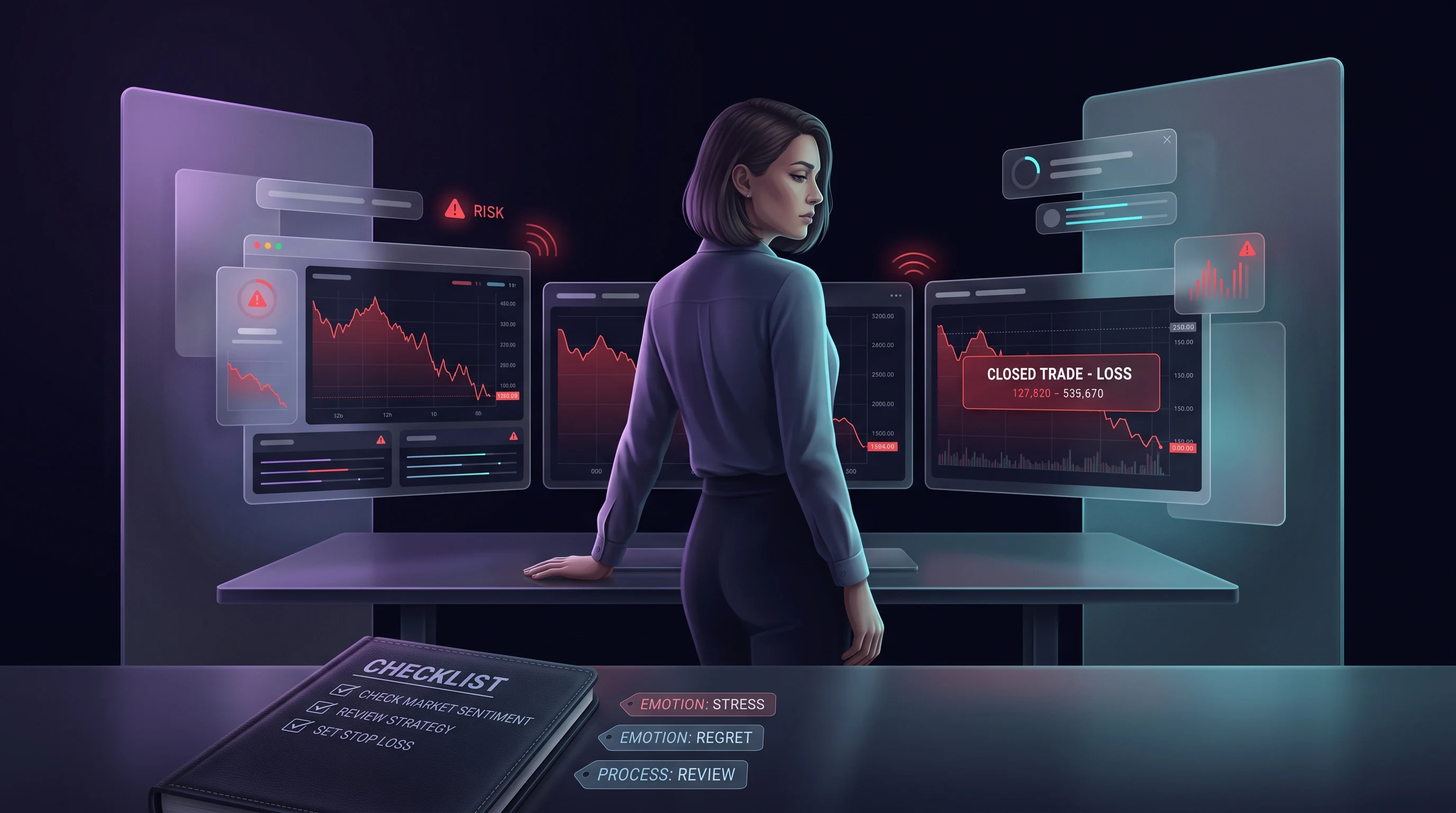
Revenge trading is one of the fastest ways for a prop firm challenge to move from controlled risk to emotional damage control. It usually starts with a loss that feels personal: a stop-out just before price moves back, a rule-following trade that fails, a missed setup that becomes a winner without you, or a small mistake that turns into frustration.
The dangerous part is not the first loss. Losses are part of trading. The dangerous part is the next decision, when the trader stops following the plan and starts trying to erase the feeling of being wrong.
What revenge trading means in a prop firm challenge
Revenge trading is the attempt to recover emotionally from a loss by taking trades that are not part of the plan. The trader is not simply looking for the next valid setup. They are trying to undo the previous result.
In a prop firm challenge, revenge trading often appears as:
- Re-entering immediately after a stop-out without a fresh setup
- Increasing position size to make back a loss faster
- Taking lower-quality trades because the account is behind target
- Ignoring daily drawdown limits until the platform forces discipline
- Moving stops, removing stops, or widening risk after entry
- Switching strategies mid-session because the original plan feels too slow
- Watching P&L more closely than execution quality
The behavior can look decisive in the moment, but it is usually reactive. A trader may tell themselves they are being opportunistic, when the real driver is frustration, embarrassment, fear, or urgency. Revenge trading is one of several psychological patterns explored in more depth in Trading Psychology for Prop Firm Traders.
Why revenge trading feels rational in the moment
Revenge trading is not just a lack of knowledge. Many traders understand risk management perfectly well when they are calm. The problem is that losses can change the way decisions feel.
Behavioral finance research often discusses loss aversion, overconfidence, and regret avoidance as forces that can distort financial decisions. The SEC Office of the Investor Advocate has summarized how investors may hold losing positions, become overconfident, or focus too heavily on short-term outcomes. Barber and Odean have also written about how overconfidence can contribute to excessive trading.
For traders, the same patterns can show up during a challenge:
- Loss aversion makes the account drawdown feel more painful than an equivalent gain feels satisfying.
- Regret avoidance makes the trader want to fix the last mistake immediately.
- Overconfidence can appear after a good run, leading the trader to believe they can force a recovery.
- Recency bias makes the most recent loss feel more important than the full sample of trades.
None of these biases mean a trader is irrational as a person. They mean the trading environment is emotionally loaded, especially when rules, time pressure, and evaluation fees are involved.
The prop firm challenge trap: rules plus urgency
Prop firm challenges can intensify revenge trading because the trader is not only managing a chart. They are also managing external constraints: profit targets, maximum drawdown, daily loss limits, minimum trading days, reset costs, payout expectations, and the fear of failing another attempt.
That pressure can create a subtle shift in thinking:
- From process to target chasing
- From risk control to loss recovery
- From setup quality to account repair
- From journaling facts to justifying decisions
When the challenge becomes a race to recover, the trader may stop asking, “Is this a valid trade?” and start asking, “Can this get me back to where I was?” That question is dangerous because it focuses on emotional relief rather than trade quality.
Early warning signs before revenge trading starts
The best time to stop revenge trading is before the revenge trade happens. Most traders have a recognizable pre-pattern. The goal is to identify it while there is still room to pause.
Common warning signs include:
- You refresh the account dashboard repeatedly after a loss.
- You start calculating how many trades are needed to recover today.
- You feel tempted to take a setup you would normally skip.
- You reduce the importance of your checklist because the opportunity feels urgent.
- You blame the market, spread, broker, challenge rules, or yourself in extreme language.
- You feel physically activated: tight chest, rushed breathing, clenched jaw, restless clicking.
- You say, “Just one more trade,” even though the plan does not call for one.
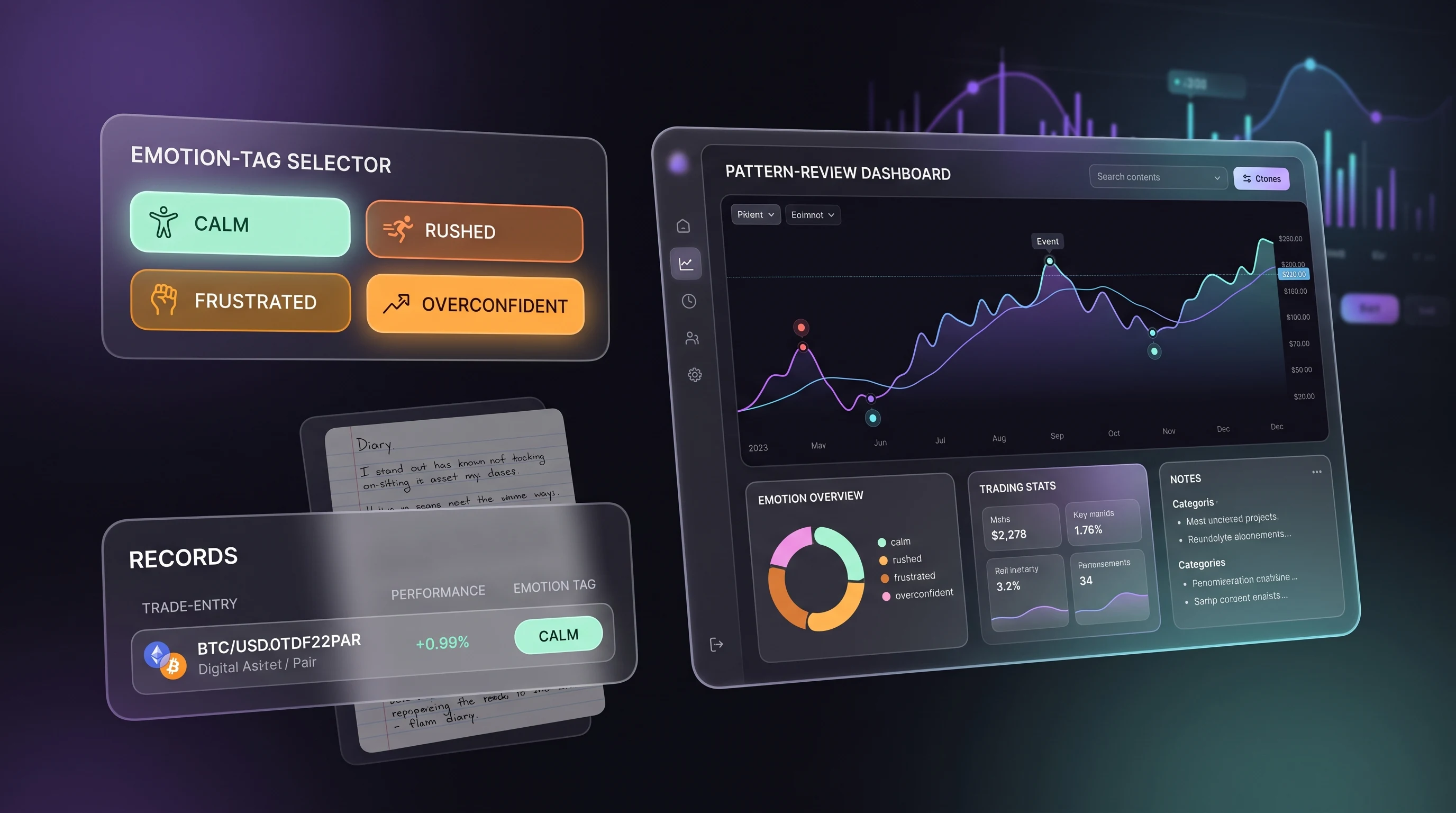
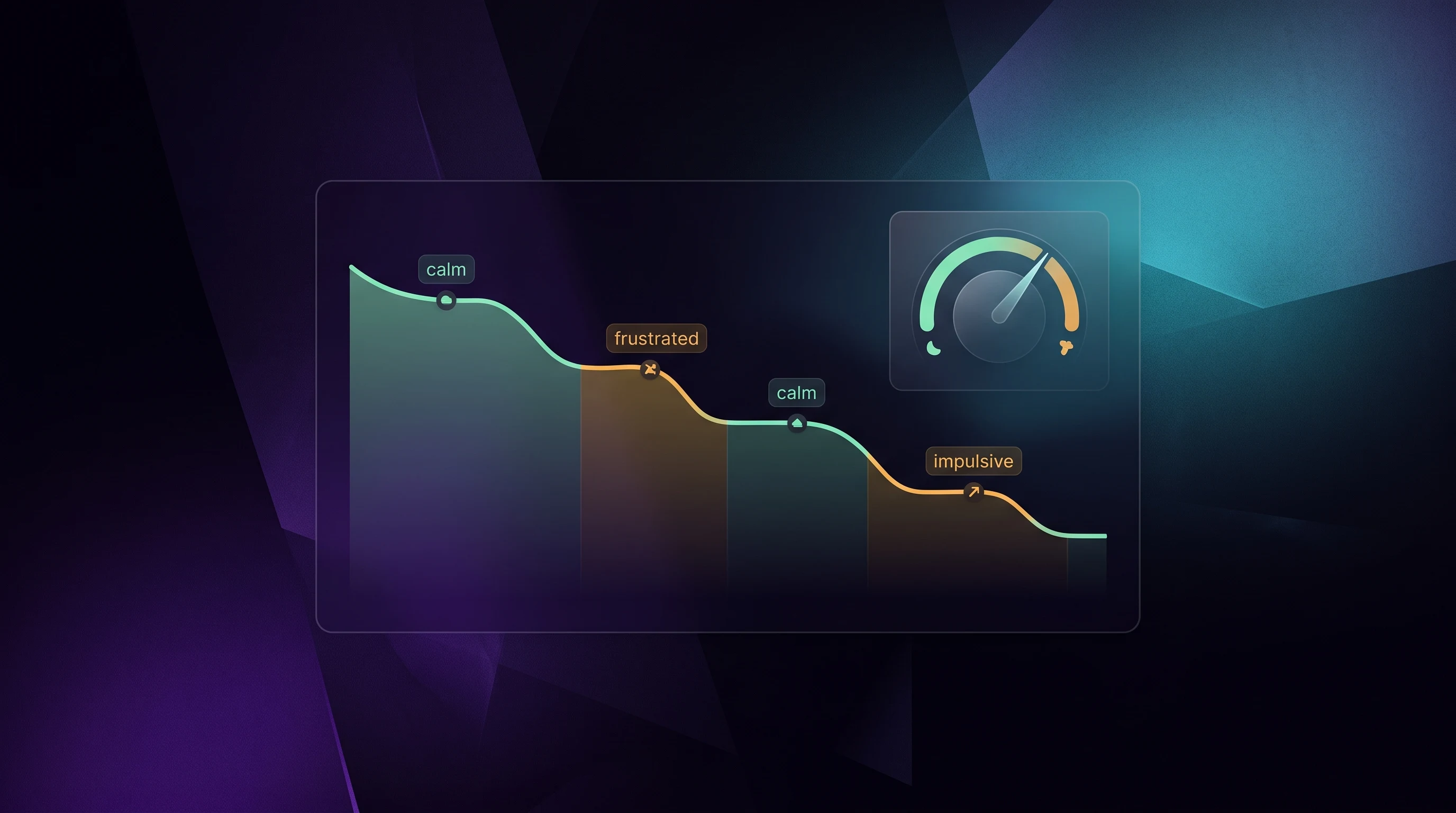
A useful journal does not need to become a diary, but it should capture enough emotional context to reveal these patterns. A simple tag like “frustrated after loss,” “urgent,” “trying to recover,” or “rule pressure” can be enough to make the pattern visible later.
A practical stop-cycle framework
The goal is not to eliminate emotion. The goal is to prevent emotion from becoming an execution command. Here is a simple framework traders can adapt for educational review.
1. Define a loss-response rule before the session
A loss-response rule is a pre-written instruction for what happens after a losing trade. It should be specific enough that you do not negotiate with yourself mid-session.
Examples:
- After one full-risk loss, take a ten-minute break before considering another trade.
- After two consecutive losses, stop trading for the session and complete a review.
- After a rule break, no more live trades that day.
- After reaching a personal emotional intensity rating of seven out of ten, pause execution.
These are examples, not recommendations. The right rule depends on the trader’s plan, risk limits, and challenge requirements. The key is that the rule exists before the emotional moment.
2. Separate trade outcome from trade quality
A losing trade can be well executed. A winning trade can be reckless. Revenge trading becomes more likely when the trader treats every loss as proof that something must be fixed immediately.
After a loss, ask:
- Was the setup part of the plan?
- Was the entry valid according to my criteria?
- Was risk defined before entry?
- Did I follow the stop and exit rules?
- Was the trade size consistent with the plan?
- Did I document the trade honestly?
If the answer is mostly yes, the loss may be normal variance. If the answer is no, the issue is process, not recovery. Either way, the next step should be review, not emotional compensation.
3. Use a pause script
A pause script is a short written message that interrupts the revenge loop. It can be placed in a journal, note-taking app, or trading checklist.
Example:
“I do not need to recover this loss right now. My job is to follow the next valid process step. If there is no valid setup, no trade is also an action.”
The wording matters less than the function. The script should move attention away from P&L and back to behavior.
4. Track the trigger, not just the trade
If a trading journal only records entry, exit, pair, size, and result, it may miss the reason revenge trading happened. Add a few lightweight fields:
- Pre-trade emotion
- Post-loss reaction
- Rule compliance
- Setup quality
- Urgency level
- Reason for taking the next trade
Over time, these fields can show whether revenge trading is linked to specific sessions, pairs, times of day, challenge phases, or emotional states.
5. Review patterns weekly, not only after failure
Many traders only review revenge trading after an account is already damaged. A better routine is to review the pattern while the account is still intact.
A weekly review can ask:
- How many trades followed a losing trade within a short time window?
- Did trade quality drop after losses?
- Did size increase after frustration?
- Which rule was most often negotiated?
- What emotion tag appeared before the weakest trades?
- Did I stop when my plan said to stop?
This turns revenge trading from a character flaw into a measurable behavior pattern.
How PropLog AI can support the review process
PropLog AI is designed to help traders organize trading behavior, journal data, P&L context, trade tags, and review routines. Used properly, a journal can make revenge trading easier to spot because the trader is no longer relying only on memory.
For example, a trader can track:
- Trades taken immediately after a loss
- Emotion tags linked to rule breaks
- P&L calendar context around weak sessions
- Setup tags that become lower quality under pressure
- Weekly review notes about discipline and execution
An AI-assisted reflection tool should not tell a trader what to buy, sell, or trade next. It should help the trader review their own data, notice patterns, and prepare better process questions. That distinction matters. The purpose is education and self-review, not signals or guaranteed performance improvement.
What to do after a revenge trading incident
If a revenge trading incident already happened, the immediate goal is not self-criticism. It is containment and learning.
A simple post-incident review might include:
- Stop trading for the period defined in your plan.
- Write down the exact trigger.
- Identify which rule was broken or negotiated.
- Record the emotion before the trade and after the trade.
- Note whether the trade was valid by setup criteria.
- Create one prevention rule for the next session.
Avoid vague conclusions like “be more disciplined.” A more useful conclusion is specific: “After two losses, I will stop for the session and complete my review before placing another trade.”
Final thoughts
Revenge trading is not solved by motivation. It is solved by designing a process that can survive frustration. Prop firm challenges make discipline visible because the rules are strict and the consequences arrive quickly. That can be stressful, but it also gives traders a clear opportunity to study their behavior.
The most important question after a loss is not “How do I make it back?” It is “What does my plan say I should do now?”
If your journal can help you answer that question honestly, it becomes more than a record of trades. It becomes a guardrail for the moments when emotion wants to take over.
Start your trading journal
Track trades, understand your psychology, and get personalized AI coaching. No signals, no financial advice — just better self-review from your own data.
Get Started Free