Trading Psychology
How to Track Trading Emotions Without Turning Your Journal Into a Diary
Learn a structured way to track trading emotions with tags instead of long journal entries, so patterns are easy to review instead of buried in a diary.
How to Track Trading Emotions Without Turning Your Journal Into a Diary
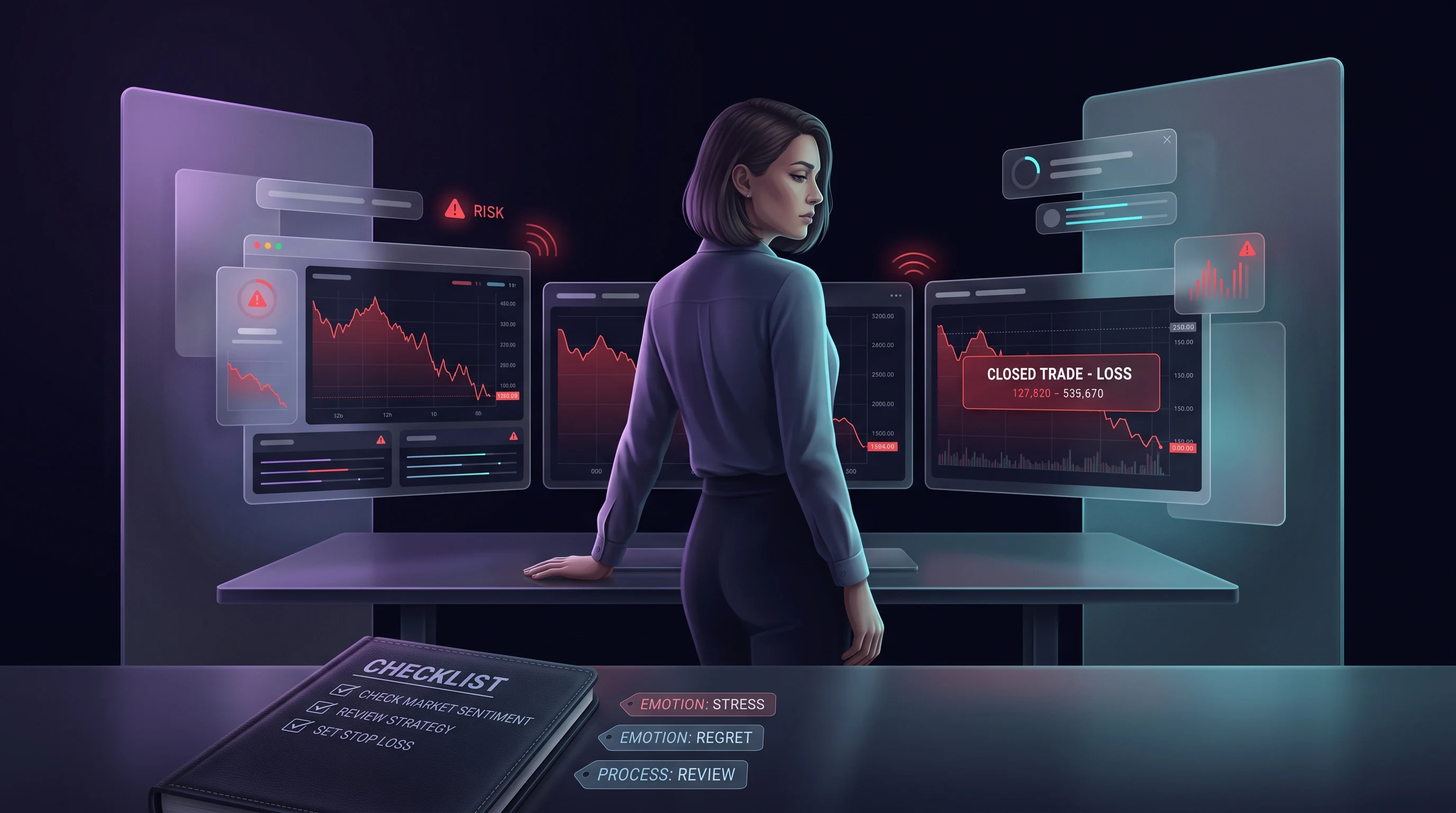
Most traders who try to track emotions start the same way: after a rough session, they open their journal and write a paragraph about how the day felt. It might mention frustration, a rushed entry, or a feeling that the market “owed” them a winning trade. A week later, there are pages of narrative and no clear pattern. The journal has become a diary, and a diary is hard to review.
Tracking trading emotions is genuinely useful. It helps a trader connect a specific state of mind to a specific decision, which is far more actionable than remembering “I felt bad that day.” The problem is not the idea of tracking emotions. The problem is doing it in a format that cannot be reviewed at scale.
Why “Just Write How You Feel” Breaks Down
Free-text emotional notes have three practical weaknesses.
First, they are inconsistent. One entry might describe frustration in three sentences. Another might skip the emotional state entirely because the trader was in a hurry. Inconsistent data is difficult to compare across a week or a month.
Second, they are hard to search. If a trader wants to know how often “overconfidence” appeared before a losing trade, free-text notes require re-reading dozens of entries rather than filtering a field.
Third, long narrative entries reward venting more than reviewing. It feels productive to write about a hard day, but venting is not the same as identifying a repeatable trigger. A diary can become an emotional outlet without ever turning into a discipline tool.
None of this means emotional context should be ignored. It means the format needs to change from narrative to structure.
The Difference Between an Emotion Log and a Diary
A diary describes what happened, in the order it happened, with as much detail as the writer wants to include. An emotion log records a small, consistent set of information attached to a specific trade or a specific moment in the session.
The distinction matters because a log can be reviewed in seconds across dozens of trades, while a diary usually cannot. A trader does not need a full story about every trade. A trader needs enough structure to notice, for example, that “rushed” entries lose more often than “planned” entries, or that “frustrated” tags cluster in the ten minutes after a losing trade.
An emotion log keeps the door open for a short note when something meaningful happened. It just does not depend on narrative as the primary record.
A Structured Framework: Tag, Don’t Narrate
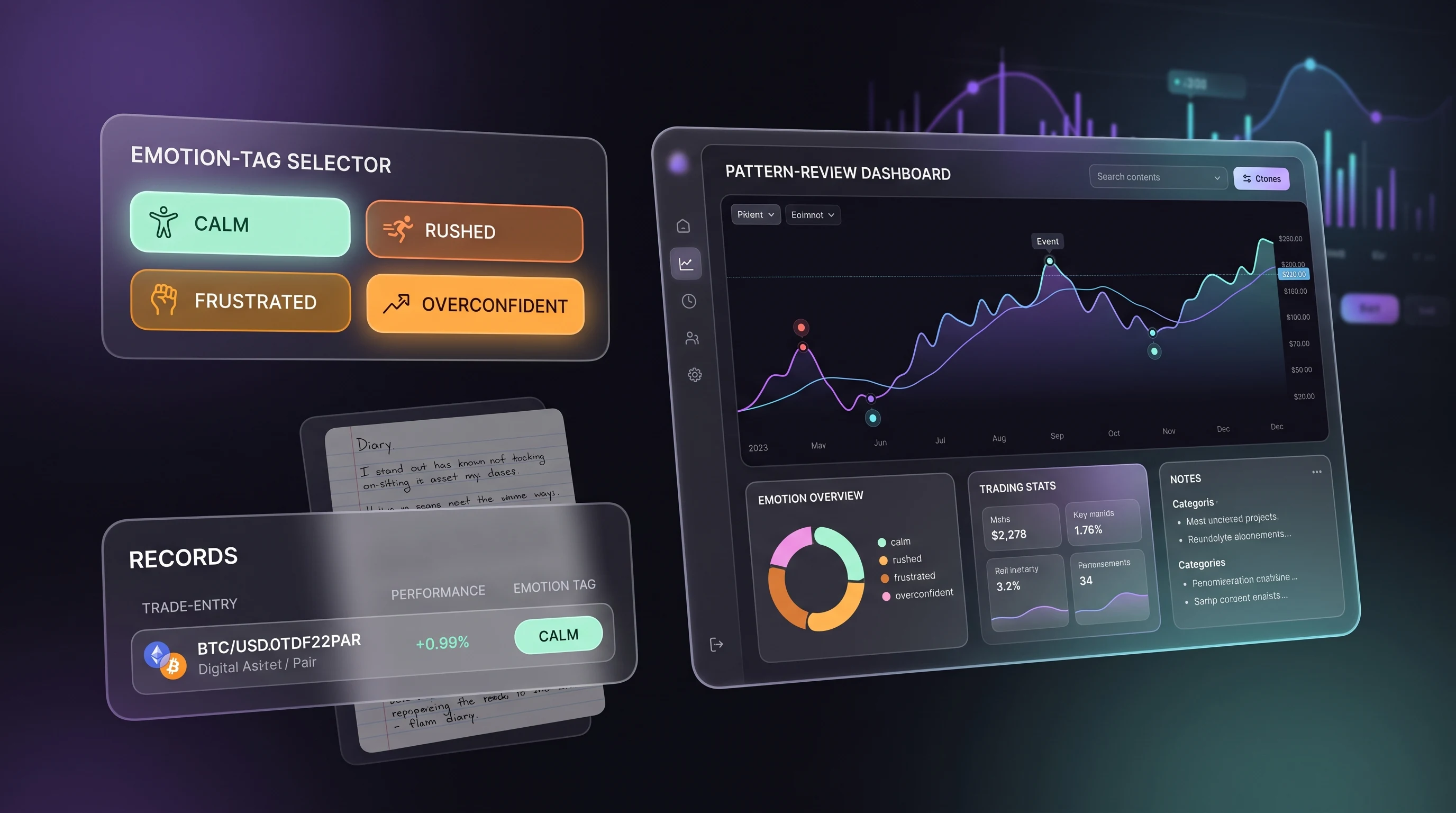
A practical emotion-tracking method has three parts: a fixed tag list, a consistent moment to apply it, and a short optional note.
1. Use a fixed, short list of tags. A workable list is usually five to eight states, not fifty. Something like calm, rushed, frustrated, overconfident, hesitant, distracted, and relieved covers most trading sessions without becoming its own project to maintain.
2. Apply the tag at a consistent moment. Tagging immediately before entry captures the state that influenced the decision. Tagging immediately after exit captures the state that followed the outcome. Many traders benefit from doing both, since a calm entry can still be followed by a frustrated exit if the trade moves against plan.
3. Add one short, optional sentence, not a paragraph. A single sentence such as “entered early because I didn’t want to miss the move” gives useful context without turning the log into prose. If a sentence is not needed, it can be left blank.
This structure keeps the log fast enough to complete in real time, which matters because a tracking method that takes too long during a live session usually gets abandoned within a few weeks.
Where Emotion Tags Belong in the Trade Review
Emotion tags are most useful when they sit next to the same fields a trader already reviews: setup, planned risk, rule compliance, and outcome. On their own, an emotion tag is just a label. Next to outcome and rule-following data, it becomes a pattern-finding tool — one piece of the broader picture covered in Trading Psychology for Prop Firm Traders.
For example, a trader reviewing a month of tagged trades might notice that “overconfident” tags appear disproportionately after a winning streak, and that trades tagged this way tend to carry larger size than the trading plan allows. That is a useful, specific observation. It is different from a vague sense that “I get careless sometimes.”
The same structure can surface patterns connected to revenge trading after a loss, or a drift toward overtrading during high-pressure sessions. The point is not to label every emotion as dangerous. Calm and even mildly excited states are a normal part of trading. The goal is to notice which specific states, in this specific trader’s history, tend to precede rule breaks or outcomes that don’t match the trading plan.
Reviewing Emotion Data Without Overreacting to a Single Bad Day
One frustrated tag on one difficult day is not a pattern. It is one data point. A common mistake is treating a single emotional entry as proof of a deep problem, which can lead to overcorrecting a plan that was actually fine.
A more useful review looks at tags across a meaningful sample, such as two to four weeks of trades, and asks simple questions:
- Which tag appears most often before a rule break?
- Is there a tag that shows up mostly on specific days or sessions?
- Does one tag correlate with a specific type of setup, such as breakout entries or news-driven trades?
- Are calm-tagged trades following the plan more consistently than rushed-tagged trades?
These questions treat emotional data the same way a trader would treat any other journal field: something to observe across a sample, not to react to after a single entry.
A Simple Example of Turning Tags Into a Pattern
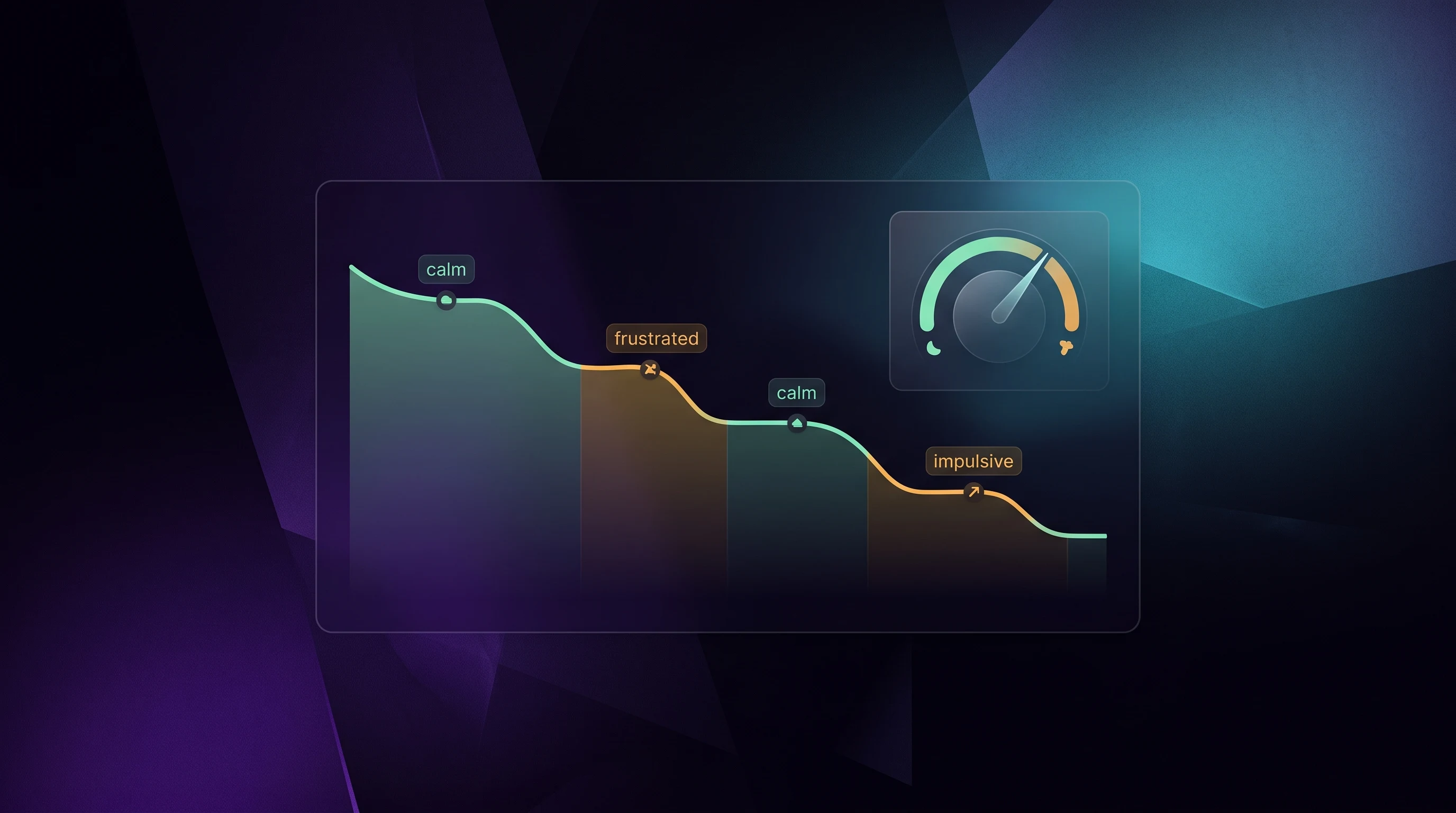
Consider a trader who tags “rushed” or “calm” before every entry and “relieved,” “frustrated,” or “neutral” after every exit, for three weeks. On their own, none of those tags mean much. Reviewed together, they can tell a specific story.
Suppose the review shows that “rushed” entries make up only 15% of total trades but account for a much larger share of trades where the planned stop was moved or skipped. That is not a moral judgment about the trader’s character. It is a specific, observable link between one tagged state and one specific rule-compliance problem.
The next step is narrow, not dramatic. Rather than rewriting the entire trading plan, the trader might add one line to their pre-trade checklist: pause for sixty seconds before entering any trade tagged “rushed.” That is a small adjustment tied directly to a pattern that showed up in the trader’s own data, not a generic tip borrowed from somewhere else.
This is the practical payoff of tagging instead of narrating. A diary entry describing a rushed trade might be interesting to reread, but it does not, by itself, produce a comparison across three weeks of trades. A short tag attached consistently to every trade does.
How PropLog AI Supports This
PropLog AI is built to make structured tracking like this easier to maintain and easier to review, rather than replacing the trader’s own judgment. Emotion tags can be attached directly to trade entries alongside setup, planned risk, and rule-compliance fields, so the tagging step stays fast enough to survive a live session.
From there, Propol AI Coach can help surface patterns already present in a trader’s own data — for instance, which emotional tags show up most often near rule breaks, or whether a particular tag clusters around specific sessions or setups. This is a reflection tool based on the trader’s own journal history, not a source of trading advice, predictions, or signals. It does not tell a trader what to trade next; it helps make existing behavior easier to see.
Combined with PropLog AI’s broader discipline tracking — trade journal fields, rule-compliance tags, and P&L review — emotion tracking becomes one more structured input into a trader’s own process review, rather than a separate diary kept on the side.
Common Mistakes to Avoid
Tracking too many emotional states. A list of twenty possible tags is harder to apply consistently than a list of six or seven. Fewer, clearer categories usually produce more usable data.
Only tagging bad trades. Skipping the tag on calm, uneventful trades removes the baseline needed to tell whether a “rushed” tag is actually unusual for this trader or a routine state.
Treating every emotion as a warning sign. Excitement, focus, and even mild nervousness are common and not inherently harmful. The review should look for tags connected to actual rule breaks or plan deviations, not eliminate normal human reactions to trading.
Letting notes turn back into paragraphs. If the optional note field starts growing into a full narrative again, it is worth returning to the one-sentence rule.
Conclusion
Tracking trading emotions is worth doing, but a diary format makes the data hard to use. A short, consistent tag list, applied at the same moment for every trade, turns emotional awareness into something that can actually be reviewed alongside setup, risk, and rule compliance. The goal is not to eliminate emotion from trading — that isn’t realistic — but to notice, over a meaningful sample of trades, which specific states tend to show up before the decisions a trader’s own plan would flag as a problem.
Start your trading journal
Track trades, understand your psychology, and get personalized AI coaching. No signals, no financial advice — just better self-review from your own data.
Get Started Free