Trading Psychology
Trading Emotions: The Silent Account Killer
Fear, greed, FOMO, revenge — your emotions are making you lose money. Here's how to identify your emotional patterns and stop them from wrecking your account.
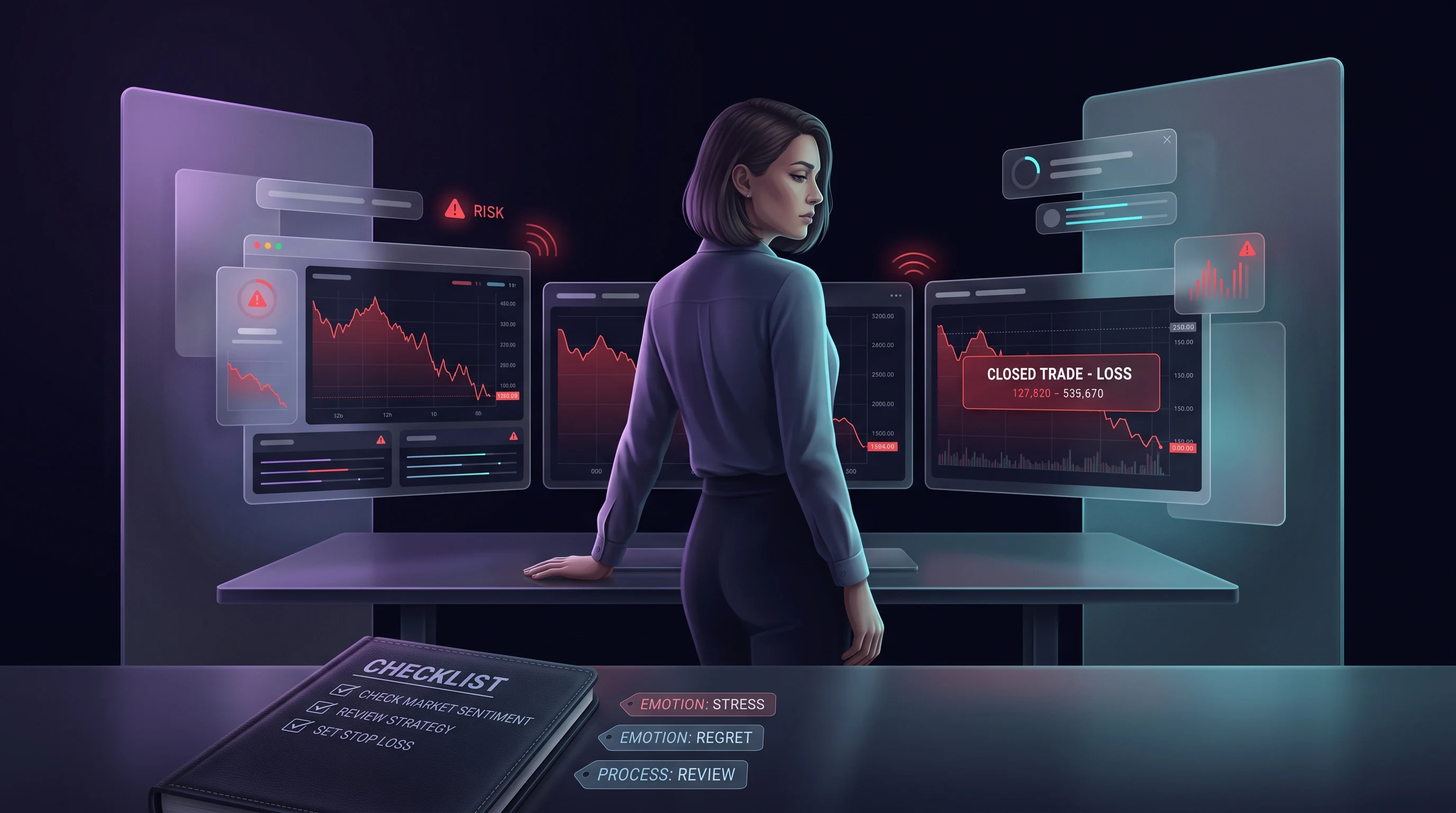
You had a perfect setup. You saw the entry, you knew the plan, you even wrote it down. And then you moved your stop loss. Or took profit too early. Or doubled your position because you “felt confident.”
Sound familiar?
The number one reason traders blow accounts isn’t bad strategy — it’s unmanaged emotions.
The Five Emotions That Destroy Trading Accounts
1. Fear
Fear makes you:
- Exit winning trades too early (“What if it reverses?”)
- Avoid taking valid setups (“What if I’m wrong?”)
- Use position sizes too small to matter
Fear isn’t always obvious. Sometimes it disguises itself as “being cautious” or “protecting capital.” But if you’re consistently cutting winners short while your strategy says hold, that’s fear talking.
2. Greed
Greed makes you:
- Hold winners way past your target (“It might go further!”)
- Increase position size after a winning streak
- Skip your trading plan because you want “just one more trade”
The tricky thing about greed is that it feels like confidence. The difference? Confidence follows a plan. Greed abandons it.
3. FOMO (Fear of Missing Out)
FOMO makes you:
- Chase entries after the move already happened
- Enter trades without a clear setup (“It’s moving, I need to be in!”)
- Trade pairs or instruments you haven’t studied
FOMO is the most expensive emotion in trading. The entries are always worse, the stops are always wider, and the conviction is always lower.
4. Revenge
Revenge trading makes you:
- Immediately re-enter after a loss to “get it back”
- Double position size to recover faster
- Abandon your plan entirely
Revenge trading is a spiral. One loss becomes two. Two becomes four. Before you know it, a normal loss day becomes an account-threatening drawdown.
5. Boredom
Boredom makes you:
- Take subpar setups just to “do something”
- Over-trade during slow market conditions
- Create complexity where none is needed
Boredom is the most underrated account killer. It doesn’t feel dangerous — you’re just taking “one small trade.” But those boredom trades compound into a significant drag on your P&L.
How to Spot Your Emotional Patterns
Here’s the uncomfortable truth: you can’t fix what you can’t see.
Most traders don’t realize they have emotional patterns. They think each bad trade is an isolated incident. But when you start tracking your emotions alongside your trades, the patterns become impossible to ignore.
Here’s what to look for:
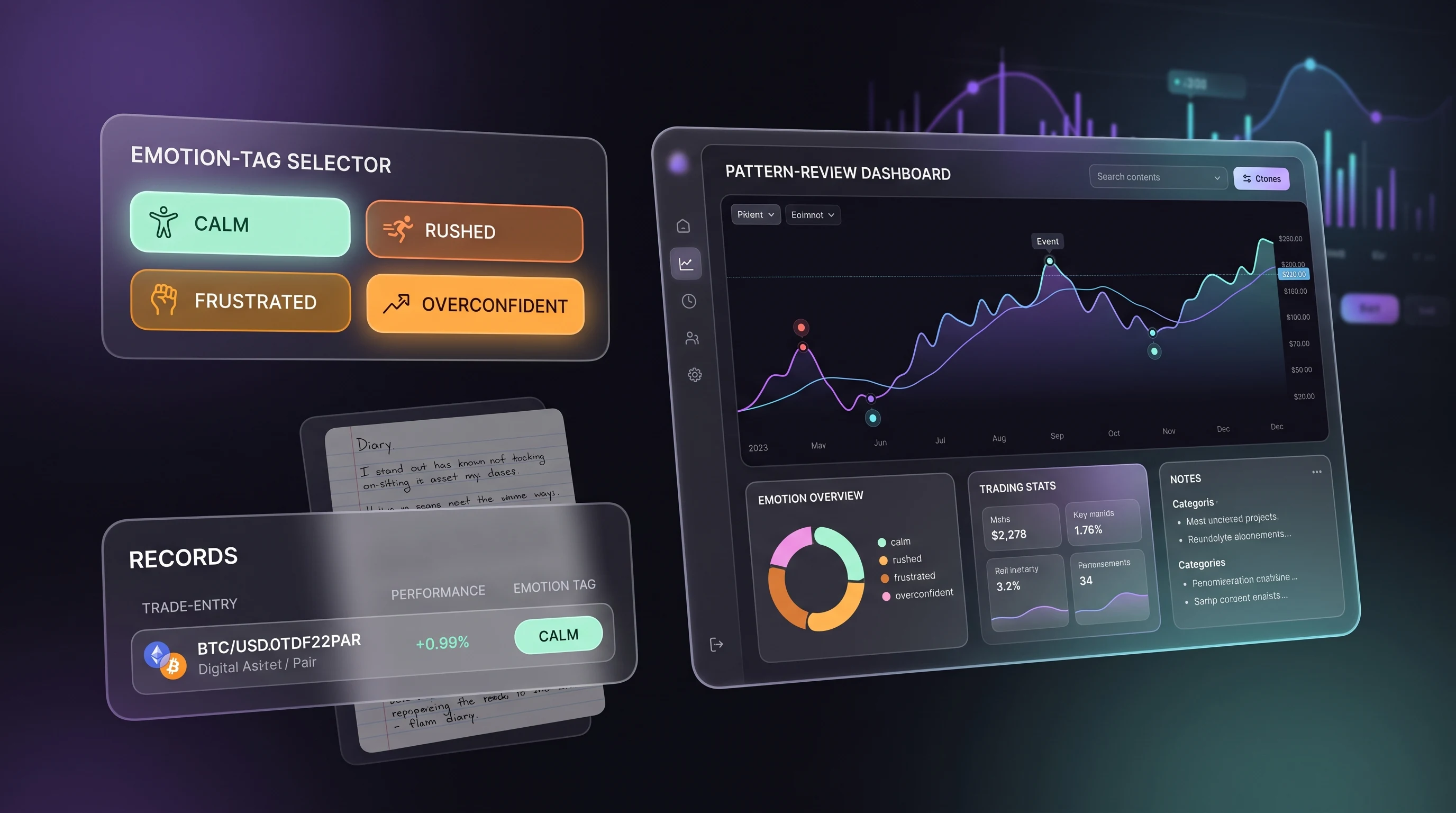
Track your emotions on every trade. Not just “I felt okay.” Specific emotions: anxious, confident, excited, frustrated, bored, calm, fearful, greedy.
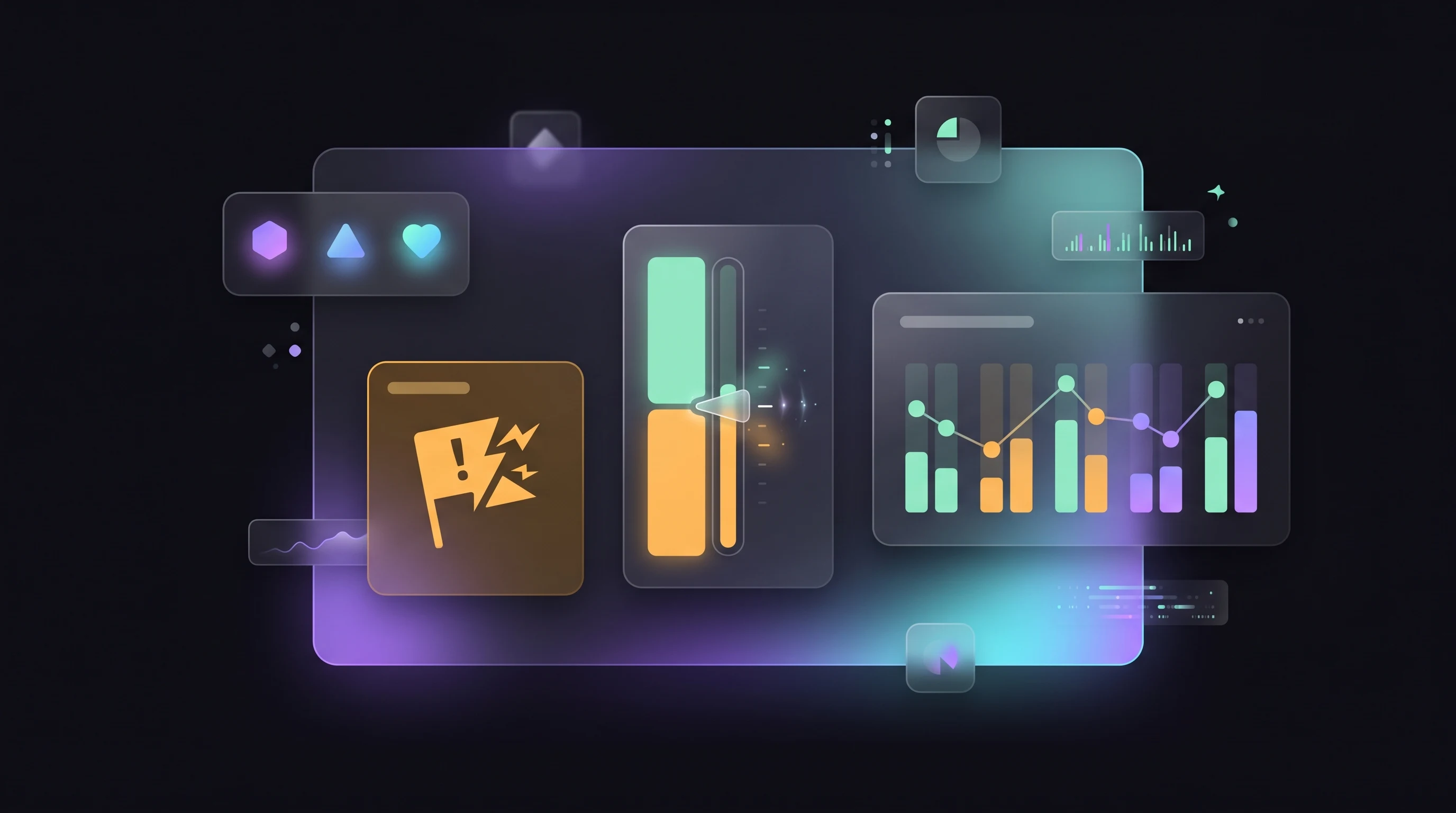
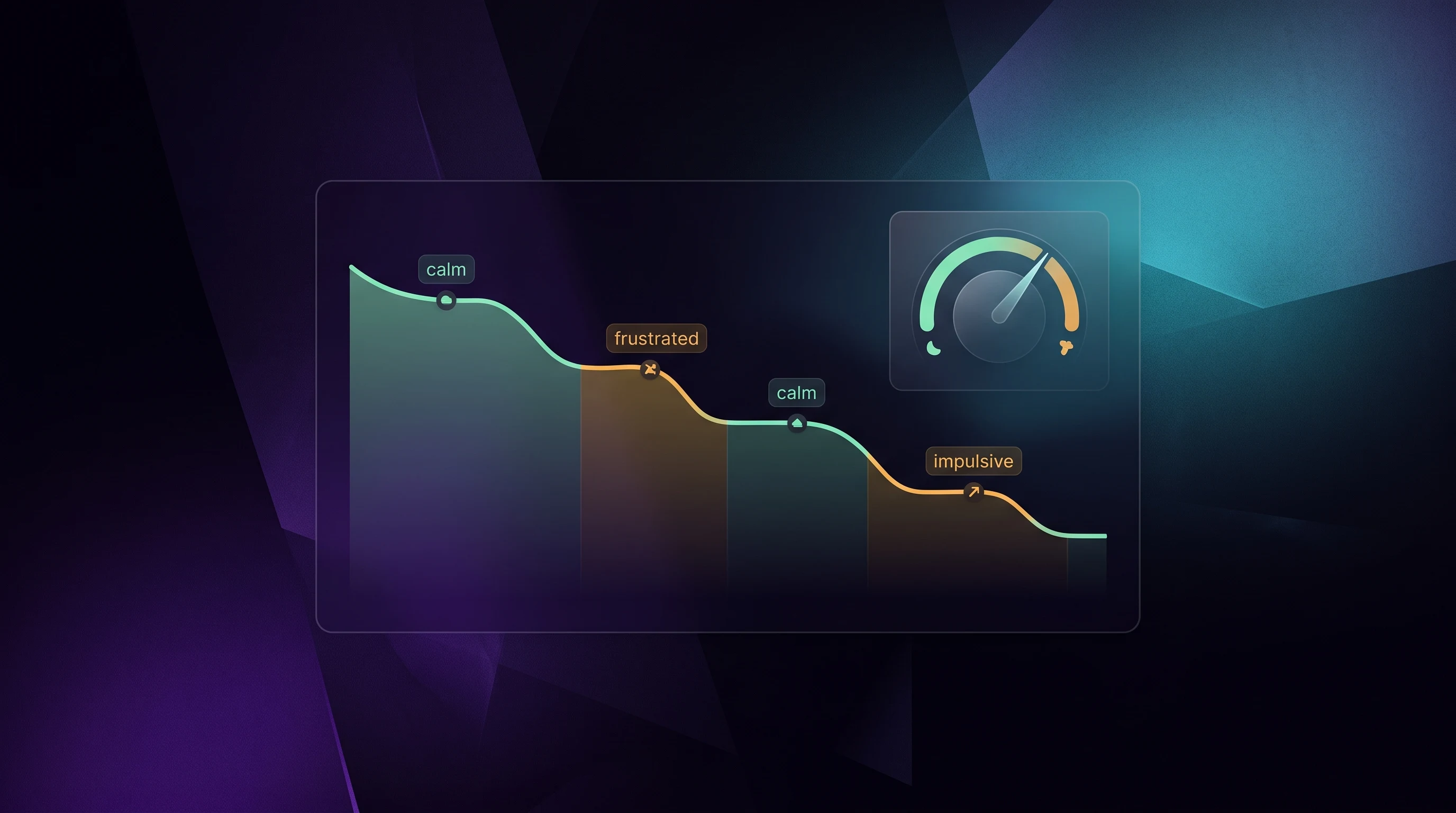
Compare emotions to outcomes. After a month, look at your win rate per emotion. You might find that trades where you felt “excited” have a 25% win rate, while trades where you felt “calm” hit 65%.
Notice the triggers. What makes you feel FOMO? Is it seeing a big move on Twitter? Is it after missing a setup you identified? The trigger is often more important than the emotion itself.
Track the time of day. Many traders become more emotional as the session progresses. Your first few trades might be disciplined, but by trade six or seven, fatigue kicks in and emotions take over.
Breaking the Cycle
Once you see the patterns, the fixes are surprisingly simple:
Create a pre-trade checklist. Before every trade, run through three questions: Is this a valid setup? Am I following my plan? How am I feeling right now? If any answer is “no” or “off,” skip the trade.
Set a daily loss limit. Not just in dollars — in number of trades. “I will take a maximum of four trades today” is more powerful than any dollar limit because it prevents the spiral.
Take breaks after losses. Not because you need to “cool down,” but because your data shows that your execution quality drops after consecutive losses. It’s not emotional advice — it’s what your own numbers say.
Journal the emotion, not just the trade. Every trade should have an emotion tag. After a month, you’ll have a personal emotion heatmap that shows exactly where you leak money. If you need a structure for this, use a trading journal workflow that captures context, not just P&L.
Your Emotions Are Data
Here’s the mindset shift that changes everything: your emotions aren’t weaknesses to eliminate. They’re data points to understand.
You’ll never trade without emotions. You’re human. But you can learn which emotions correlate with your best trades and which ones predict disaster.
That’s the difference between a trader who blows an account and one who becomes consistently profitable. Same strategy, same market, same person — just better self-awareness.
Start tracking today. The patterns will surprise you.
Start your trading journal
Track trades, understand your psychology, and get personalized AI coaching. No signals, no financial advice — just better self-review from your own data.
Get Started Free