Trading Journaling
Trading Journal Fields Every Prop Firm Trader Should Track
A practical guide to the trading journal fields prop firm traders can track to review risk, rule adherence, emotions, and weekly patterns without relying on trading signals.
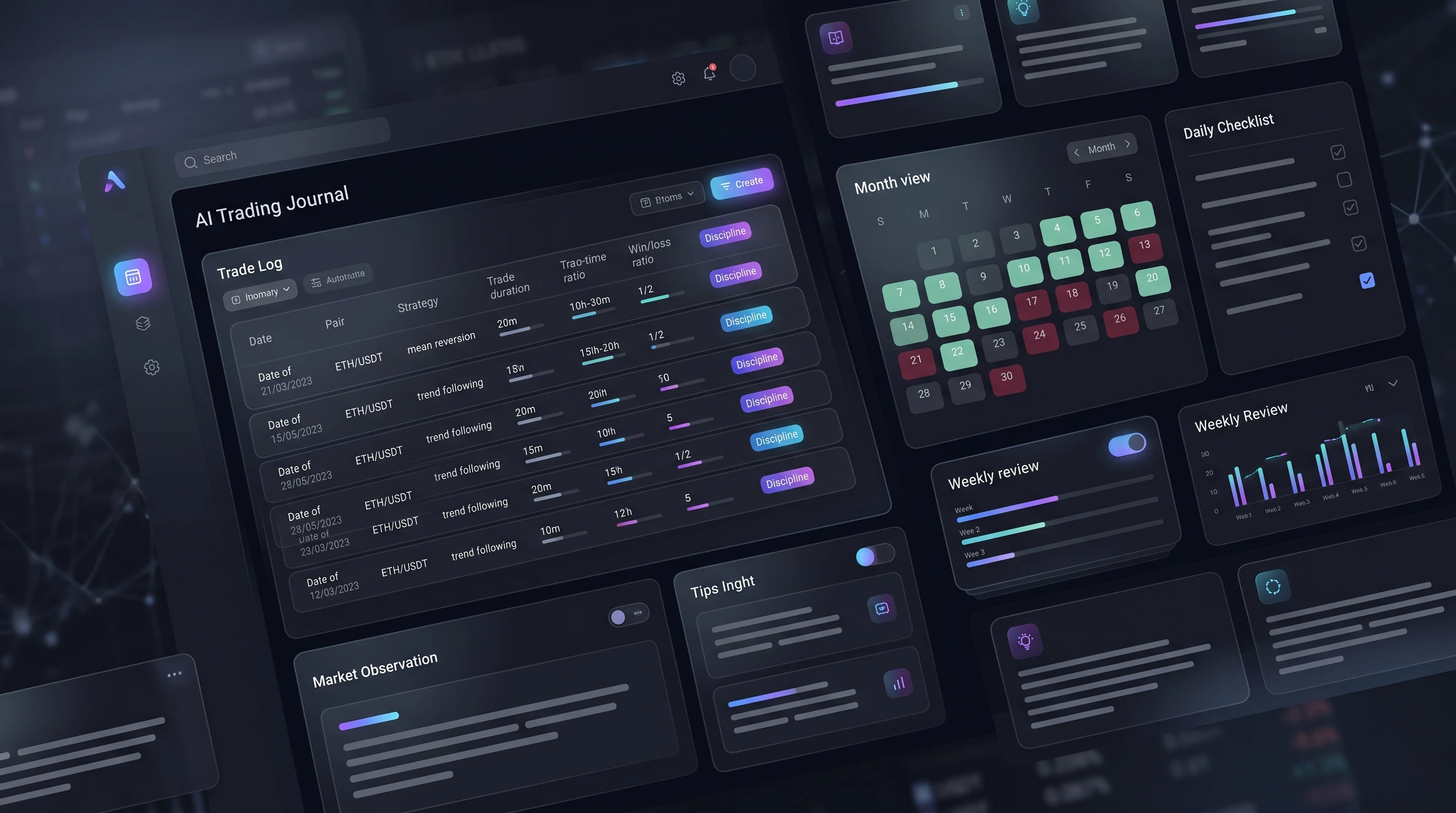
Prop firm traders need more than a simple list of entries, exits, wins, and losses. Because prop firm accounts often include daily loss limits, maximum drawdown rules, consistency requirements, minimum trading days, and other account-specific constraints, a useful journal should help a trader review both performance and behavior.
Why journal fields matter for prop firm traders
A trading journal is only useful if the data inside it can answer better questions later. A trader who only tracks profit and loss may know whether a day was green or red, but they may not know why a mistake happened, whether a rule was broken, or whether a pattern is repeating.
Prop firm traders have an extra layer of review because the goal is not simply to place trades. The trader also has to operate inside a defined rule set. A profitable trade can still be a poor process trade if it involved too much risk, ignored a rule, or encouraged habits that may become costly later. A losing trade can still be useful if it followed the plan and created clear review data.
The best journal fields help connect the trade result to the trader’s decision-making process. If you are still building the foundation, start with why every trader needs a trading journal before adding more advanced review fields.
1. Market, instrument, and session
Start with basic context: the market, symbol, session, date, and time of entry. For forex traders, this might include London session, New York session, Asian session, or a specific overlap period. For other markets, it may include the cash open, pre-market, or a defined volatility window.
This field helps answer questions such as:
- Do mistakes cluster during a specific session?
- Are certain instruments creating more impulsive decisions?
- Does performance change when volatility is higher or lower?
- Are trades being taken outside the planned trading window?
The point is not to decide that one session is automatically better than another. The point is to make patterns visible.
2. Setup type and trade thesis
Every trade should have a short explanation of why it was taken. This does not need to be complicated. A trader might record the setup name, market condition, timeframe, and one or two sentences explaining the idea.
Useful fields include:
- Setup name
- Direction
- Timeframe
- Market condition
- Reason for entry
- Invalidation point
The trade thesis field is especially important because it separates planned trades from reactive trades. If a trader cannot explain the reason for entry in plain language, that may be useful review information by itself.
3. Planned risk before entry
Planned risk should be recorded before the trade is evaluated by outcome. This helps the trader review whether risk decisions were made deliberately or changed under pressure.
Fields may include:
- Planned position size
- Planned stop location
- Planned account risk
- Distance to daily loss limit
- Distance to maximum drawdown limit
- Whether the trade fits account rules
For prop firm traders, rule proximity matters. A trade taken near a daily loss limit may require different review than a trade taken with plenty of room inside the account rules. This is not about telling traders what risk to take. It is about making the decision visible for later review.
4. Execution quality
Execution quality is different from trade outcome. A trade can lose money but still be executed according to plan. A trade can make money while still showing poor process.
Simple execution fields can include:
- Entry followed plan: yes or no
- Stop followed plan: yes or no
- Exit followed plan: yes or no
- Trade was moved after entry: yes or no
- Reason for adjustment
- Screenshot before or after entry
This field helps a trader avoid judging every decision by the final P&L. The review question becomes: did I do what I said I would do?
5. Rule adherence
For a prop firm account, rule adherence deserves its own journal category. Many traders focus heavily on strategy but only notice account rules when they are close to violating them. A journal can make rule behavior part of the normal review cycle.
Rule adherence fields may include:
- Daily loss rule respected
- Maximum drawdown rule respected
- News trading rule respected
- Position sizing rule respected
- Minimum or maximum trade rule respected
- Trading window respected
- Personal rulebook followed
This section should be factual, not emotional. The trader is not trying to shame themselves. They are creating an audit trail that shows where trading discipline is strong and where the process needs support.
6. Emotional state and behavior tags
Emotional tracking does not have to become a diary. Short tags are often enough. Over time, tags can reveal whether certain emotions or behaviors appear before rule breaks, overtrading, oversized positions, or rushed exits. For a deeper explanation of behavioral tracking, see trading emotions: the silent account killer.
Examples of useful tags include:
- Patient
- Rushed
- Hesitant
- Overconfident
- Frustrated
- Revenge trade
- Fear of missing out
- Followed plan
- Broke plan
- Distracted
The goal is not to remove emotion from trading. The goal is to notice when emotion changes behavior.
7. Trade management notes
Many trading mistakes happen after entry. A trader may enter with a clear plan but then move a stop, close early, add risk, or take a second trade to compensate for the first. Trade management notes help capture what happened while the position was open.
Useful prompts include:
- What changed after entry?
- Did I manage the trade according to the plan?
- Did I react to P&L instead of market structure?
- Did I add risk for a planned reason or an emotional reason?
- Did I exit because the trade idea was invalidated or because I felt uncomfortable?
These notes are most useful when written close to the trade, before memory becomes selective.
8. Result and R-multiple
Profit and loss still matters, but it should be part of a wider context. In addition to currency P&L, many traders track R-multiple because it normalizes results by planned risk.
Potential fields include:
- Gross P&L
- Net P&L after fees or commissions
- R-multiple
- Planned risk versus actual risk
- Slippage or spread notes
- Holding time
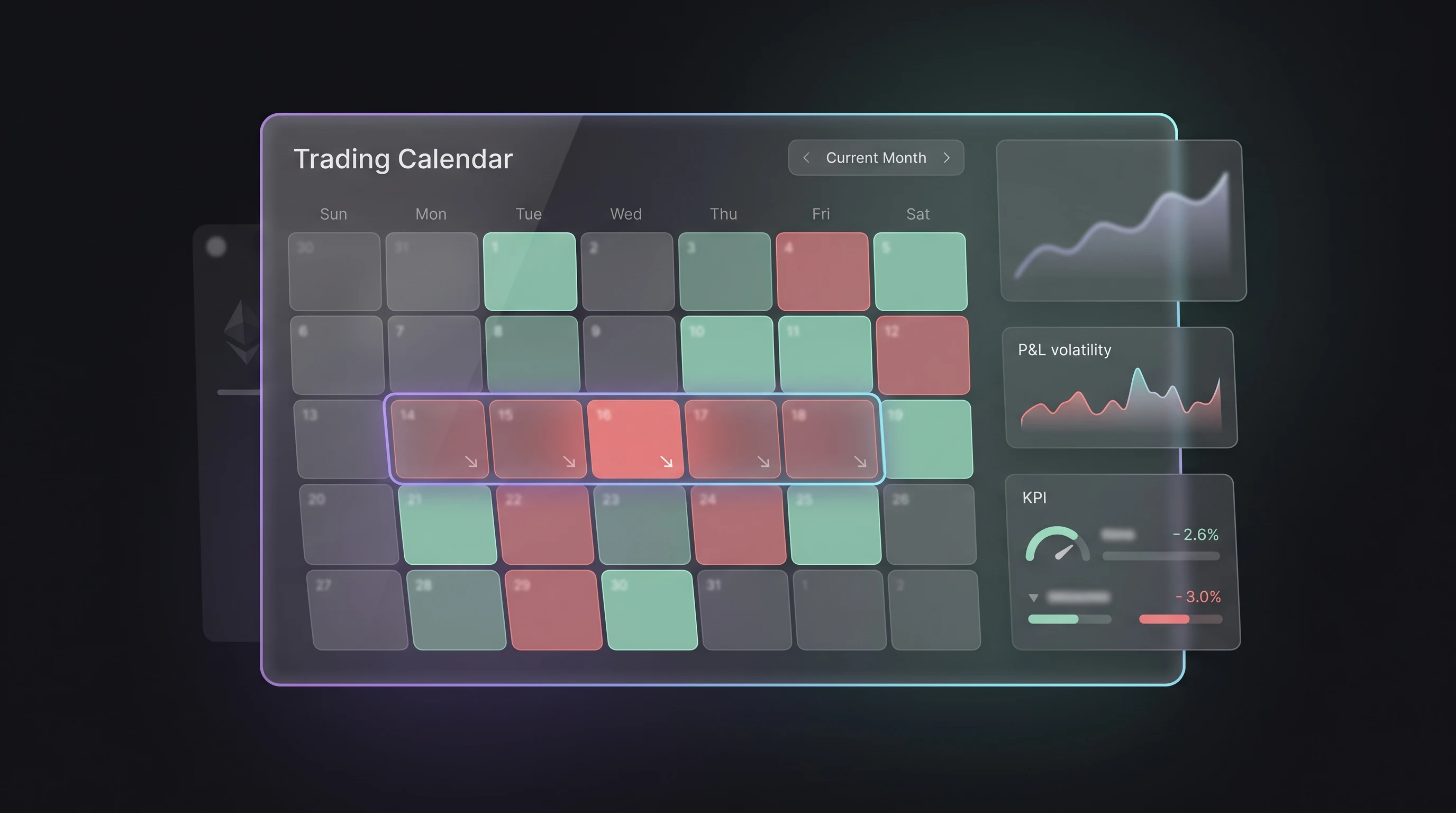
For prop firm traders, this can also support a clearer P&L calendar. Instead of seeing only green and red days, the trader can review whether the day was green because of good execution or because risk expanded beyond the plan.
9. Screenshots and chart context
Screenshots preserve what the trader saw at the time. They are useful because hindsight can make setups look more obvious than they were. A screenshot before entry and a screenshot after exit can help the trader review whether the original idea was clear, forced, late, or reasonable.
Chart context fields may include:
- Pre-trade screenshot
- Post-trade screenshot
- Marked entry and exit
- Key level or setup annotation
- Notes about market condition
Screenshots are not about creating a perfect archive. They are about giving future reviews enough context to be honest.
10. Review outcome
Each trade should end with a simple review label. This label should separate process from P&L.
Examples include:
- Good process, winning outcome
- Good process, losing outcome
- Poor process, winning outcome
- Poor process, losing outcome
- Rule break
- Needs review
This helps prevent a common review mistake: assuming every winning trade was good and every losing trade was bad. For discipline-focused traders, process quality often matters more than the result of one trade.
11. Weekly pattern notes
Individual trades can be noisy. Weekly review fields help reveal larger patterns. A trader might summarize the week by behavior, not only by P&L.
Useful weekly questions include:
- Which setup appeared most often?
- Which mistake repeated?
- Which rule was hardest to follow?
- Did emotional tags cluster on certain days?
- Did one day create most of the drawdown?
- Did I trade more after wins or losses?
This is where a P&L calendar becomes helpful. A calendar view can show whether revenge days, overtrading days, or rule-pressure days are clustered in ways that a single trade log would not reveal.
How PropLog AI fits into the workflow
PropLog AI can support this kind of journal workflow by helping traders organize trade notes, P&L calendar data, tags, review fields, and weekly reflections in one place. The goal is not to predict trades or promise better outcomes. The goal is to make review easier, more structured, and less dependent on memory.
For example, a trader can use structured tags to identify recurring behaviors, use calendar views to spot difficult periods, and use AI-assisted reflection to summarize patterns from journal data. Any insights should be treated as educational review support, not as trading instructions. For a broader view of what to track, compare this field list with the best trading journal for prop firm traders.
Keep the journal simple enough to use
A journal with too many fields can become difficult to maintain. A good starting point is to track the fields that directly support decision review:
- Setup and thesis
- Planned risk
- Rule adherence
- Execution quality
- Emotional tags
- Result and R-multiple
- Screenshot
- Review label
Once the habit is consistent, the trader can add more detail. Consistency is more useful than complexity.
Final thoughts
The best trading journal fields are not the ones that make a spreadsheet look impressive. They are the fields that help a trader review behavior clearly. For prop firm traders, that means tracking the relationship between trades, risk, rules, emotions, and weekly patterns.
A good journal does not guarantee results. It does not replace risk management, education, or independent judgment. But it can create a more honest feedback loop, and for many traders, that feedback loop is the foundation of disciplined review.
Start your trading journal
Track trades, understand your psychology, and get personalized AI coaching. No signals, no financial advice — just better self-review from your own data.
Get Started Free