Trading Journaling
Weekly Trading Review Template: What to Check Each Week
Use a simple weekly trading review template to check your trades, rule-following and one habit to test next week. See a filled-in XAUUSD example.
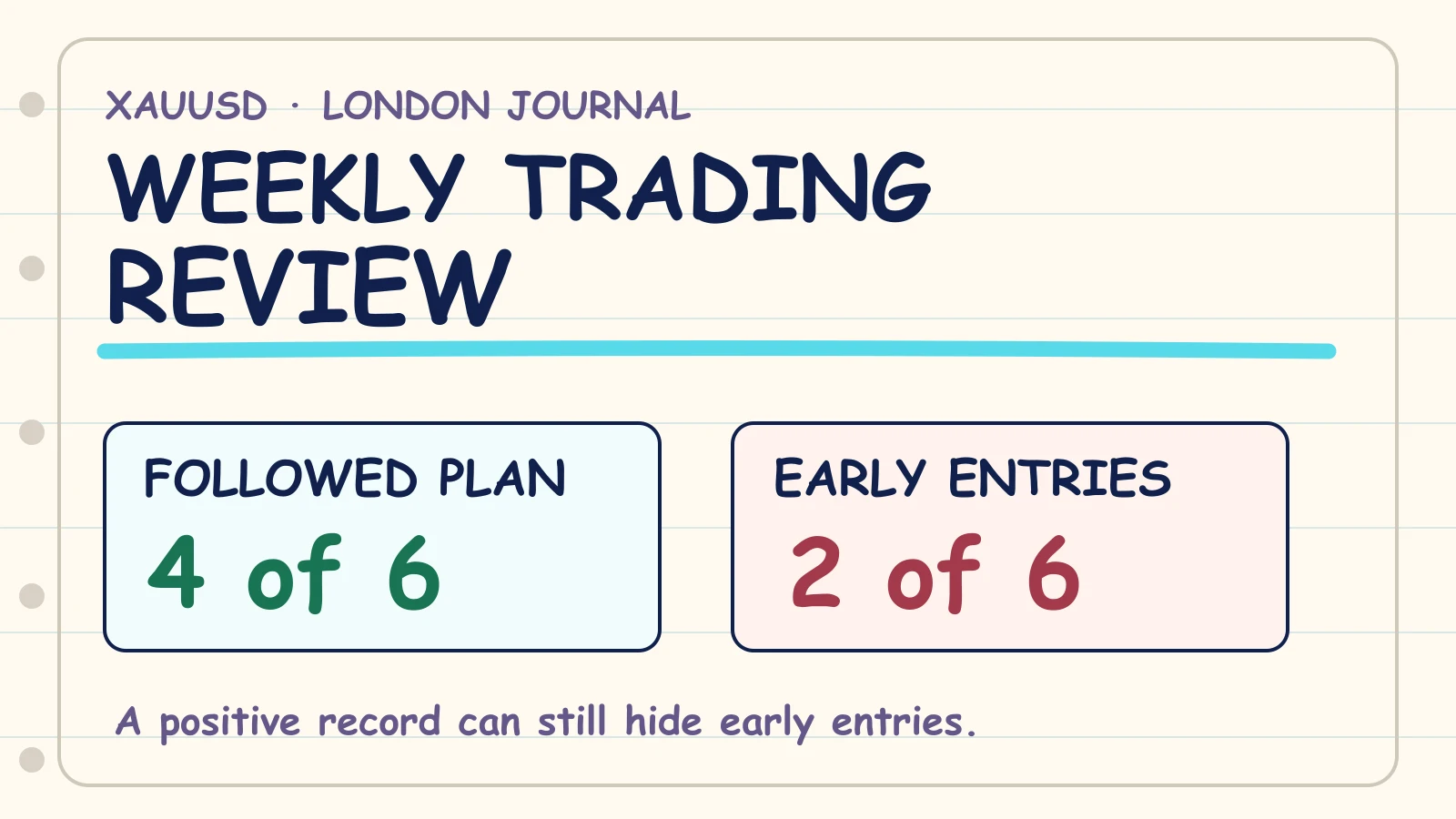
Picture a fictional weekend review. Your XAUUSD records show +$195 for the week before fees you did not record. But you also remember entering two London-session breakouts before the candle closed, even though your plan said to wait. What should you learn from that week?
Start with the records, not the feeling. A weekly trading review is one page: what you planned, what you did, what the results were, and one thing to check next week. A win can still break your plan. A loss can still follow it.
Copy this weekly trading review template
Put these prompts in your trading journal, a note, or a document. Fill them from the trades you recorded. If you do not have a detail, write “not recorded” instead of guessing.
Week and account: ______
Setup and written entry rule: ______
Trades and sessions reviewed: ______
Recorded USD result: ______
Trades that followed my written rule: ______ of ______
One decision I noticed more than once: ______
One decision I want to keep: ______
One thing I will check in next week’s records: ______
You do not need profit factor, average R, or a long list of scores to use this sheet. Those numbers can be useful in a deeper performance report, but first make sure you can explain what happened in your own trades.
Check the trades before you write a conclusion
Pick one week and one account. Read the trading plan you had before those trades. In the example below, the setup is an XAUUSD London-session breakout: price moves beyond a level the trader marked. This fictional trader’s own entry rule was to wait for the candle to close beyond that level. An entry before that close did not follow this example plan. That rule belongs to the example; it is not an instruction for your trades.
Now open each trade. Note its session, whether the entry followed that written rule, and its USD profit or loss. IG’s journal guidance explains why a trade record can include the plan, the execution, the result, and notes that account history alone may miss. Use your own notes or screenshots to check a doubtful label.
Here is one fictional week with six XAUUSD London breakouts. The USD results are recorded example amounts, before any fees that this fictional journal did not record. On a small screen, swipe the table sideways; the page itself should stay still.
| Trade | Session | Followed candle-close rule? | Recorded result |
|---|---|---|---|
| Monday | London | Yes | +$120 |
| Tuesday | London | No — entered early | +$75 |
| Wednesday | London | Yes | -$60 |
| Thursday | London | Yes | +$90 |
| Friday A | London | No — entered early | -$80 |
| Friday B | London | Yes | +$50 |
Add the six recorded results: +$195 before unrecorded fees. Count the rule labels separately: 4 of 6 followed the written entry rule; 2 of 6 did not. Tuesday’s early entry won +$75. Wednesday followed the rule and lost $60. That is why the USD total cannot tell you whether you followed the plan.
Fill in the weekly review from those records
The completed sheet can stay short:
Week and account: One fictional week, one example account.
Setup and written entry rule: XAUUSD London breakout; wait for the candle to close beyond the marked level.
Trades and sessions reviewed: Six recorded London-session trades.
Recorded USD result: +$195 before fees not recorded in this example.
Trades that followed my written rule: 4 of 6.
One decision I noticed more than once: I entered before the candle close on Tuesday and Friday A.
One decision I want to keep: I checked the candle close on four entries, including Wednesday’s loss.
One thing I will check in next week’s records: For each planned London breakout, did I wait for the close required by my existing plan?
This is a trade review across several entries, not proof that early entries caused the week’s result. Six trades cannot establish a stable pattern or tell you what your next XAUUSD trade will do. The useful observation is narrower: two recorded entries did not follow this trader’s written rule. If a trade has no screenshot or rule label, mark it “not recorded” and check it before you count it.
What should you do next week?
You do not have to rewrite your whole trading plan because of one week. Use the final line of the sheet as a record check: when a setup comes up under your existing plan, note whether you followed its entry condition. At the next weekly review, you can compare what you actually recorded. If you changed your rule during the week, write down when you changed it rather than grading every trade against a rule it did not have.
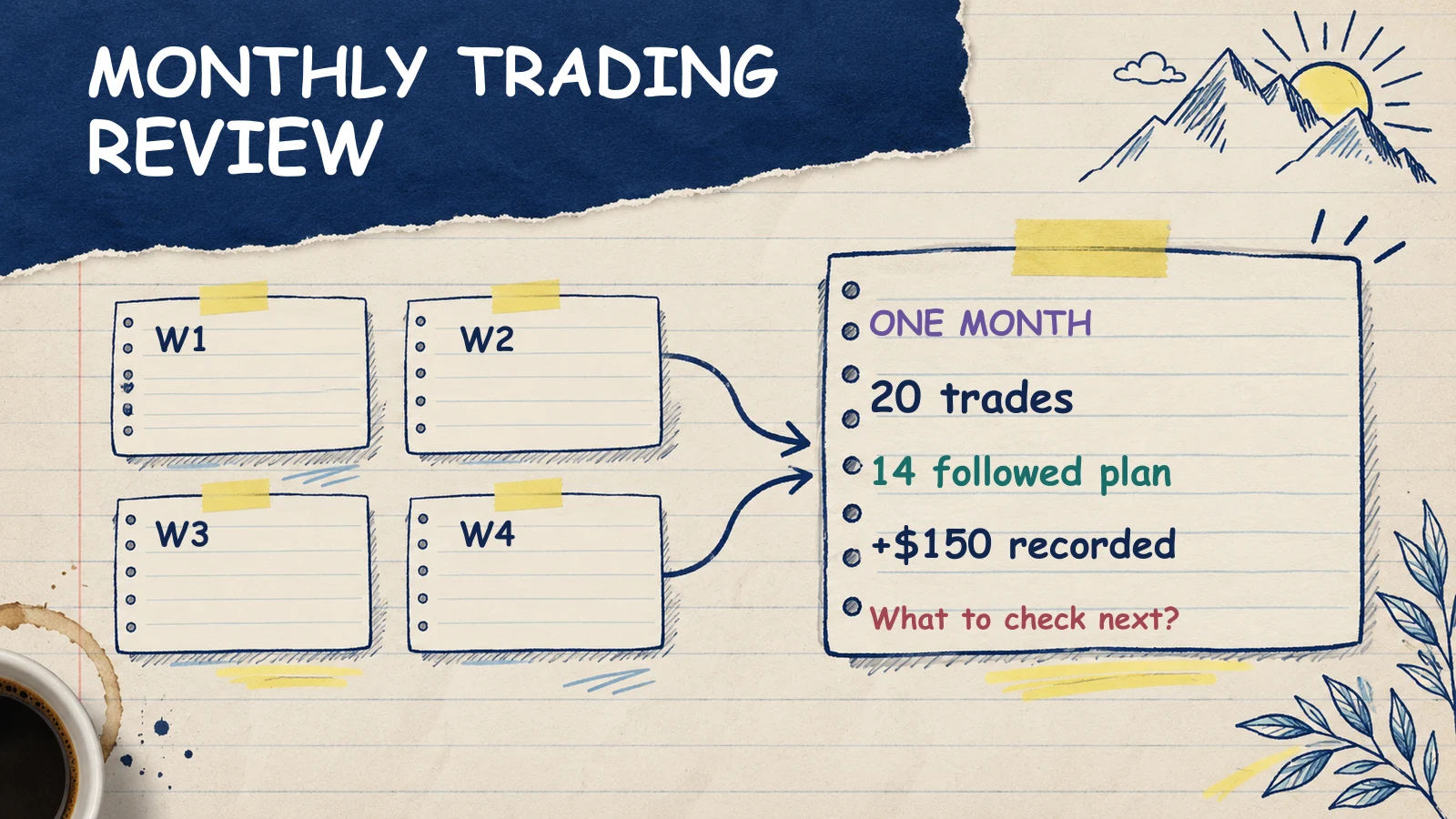
A weekly note is a check-in, not a verdict on your skill. If there were only one or two comparable trades, say so. After several weeks, a monthly trading review can compare those weekly notes without pretending that one small group settles the question. If you need the fields to record each trade first, use the prop-firm trading journal guide.
PropLogAI can help you log trade details, notes and whether you followed your own rules. Its dashboard shows metrics calculated from recorded trades, and its P&L calendar shows recorded results by day. Those views can help you find the entries to check, but you decide what the records mean. The worksheet on this page is an educational template; it is not a promise that a matching weekly worksheet exists inside the app.
Start your trading journal
Track trades, understand your psychology, and get personalized AI coaching. No signals, no financial advice — just better self-review from your own data.
Get Started Free